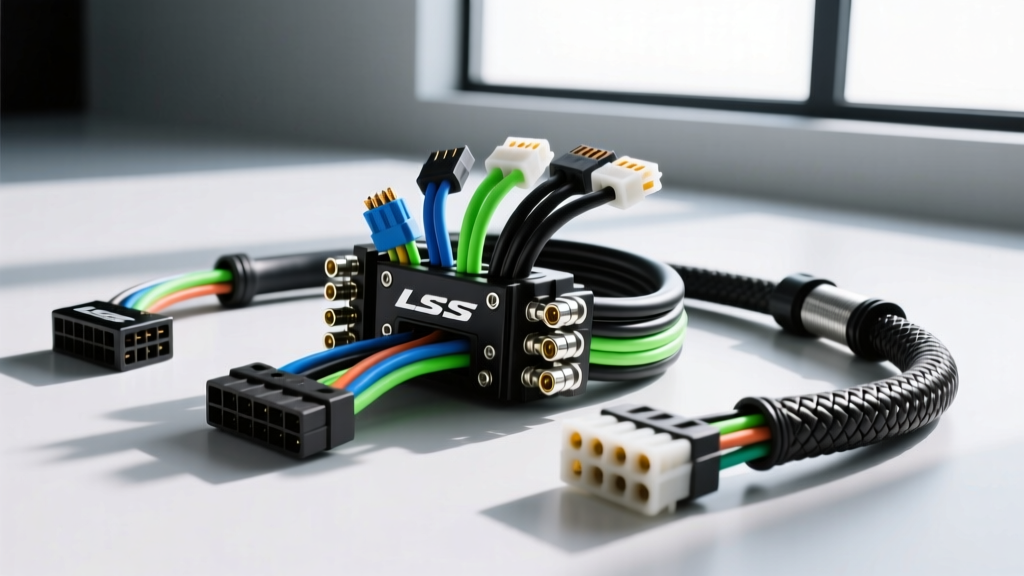
The Hidden Bottleneck in Automotive Electrical Builds
When planning a complex ECU relocation, full chassis rewire, or modern engine swap, the electrical nervous system of the vehicle is often the final component addressed. This creates a massive logistical bottleneck. Understanding the lead time for automotive wiring harness procurement is just as critical as selecting the correct AWG gauge or pinout configuration. A delayed harness means a stalled project, regardless of whether the engine is built and the chassis is prepped.
At Autoflowwire, we frequently see builders underestimate the manufacturing, sourcing, and assembly timelines required for different harness categories. Below, we break down the realistic lead times, technical specifications, and procurement strategies for OEM replacements, aftermarket swap kits, and fully custom Mil-spec harnesses.
Harness Category Breakdown: Lead Times and Specifications
1. OEM Direct Replacement Harnesses
Ordering a direct factory replacement harness from a dealership or OEM supplier (such as Mopar, GM Genuine Parts, or Ford Motorcraft) seems like the most straightforward route for restorations or minor repairs. However, these harnesses are subject to global automotive supply chain fluctuations.
- Typical Lead Time: 4 to 16 weeks. Backordered chassis harnesses for vehicles older than 10 years can stretch to 6+ months or face permanent discontinuation.
- Wire Standard: SAE J1128 TXL (Thermoplastic Cross-Linked) or GXL. These feature standard wall thicknesses with temperature ratings up to 125°C.
- Connectors: Proprietary OEM sealed and unsealed housings (e.g., TE Connectivity AMP Superseal 1.5, Yazaki, or Sumitomo).
- Best For: Stock restorations, dealership warranty repairs, and retaining factory CAN-bus topologies without requiring aftermarket gateway modules.
2. Aftermarket Engine Swap Harnesses (LS/LT/Coyote)
For the massive community performing V8 swaps (such as dropping a Gen IV LS3 or Ford Coyote into a classic chassis), pre-configured aftermarket harnesses from manufacturers like Holley, Painless Performance, or MSD are the industry standard. These are built in batch runs and usually stocked in distribution centers.
- Typical Lead Time: In-stock to 3 weeks. Because these are high-volume catalog items (e.g., a universal 4L60E/LS swap harness), they are rarely subject to long manufacturing delays unless a specific ECU connector is on global backorder.
- Wire Standard: High-strand count copper, typically 10 AWG for main EFI relays and 18 AWG for sensor grounds and 5V references. Often wrapped in split loom or basic braided sleeving.
- Connectors: Pre-terminated ECU plugs (e.g., GM 24-way and 32-way blue/black connectors) with unterminated pigtails for chassis integration.
- Best For: Weekend LS swaps, off-road buggies, and budget-conscious restomods where standardized pinouts are acceptable.
3. Custom Mil-Spec & Motorsport Harnesses
When building a dedicated track car, a high-end restomod, or an aerospace-grade show vehicle, off-the-shelf harnesses fall short. Custom fabrication houses build these harnesses to order on 1:1 wooden or acrylic pegboards based on your exact CAD files or physical vehicle measurements.
- Typical Lead Time: 8 to 16 weeks. The engineering phase (drawing the schematic), sourcing specialized Mil-spec components, and the meticulous hand-lacing and shrink-sleeving process are incredibly labor-intensive.
- Wire Standard: MIL-W-22759/16 Tefzel (Ethylene Tetrafluoroethylene). Tefzel wire is highly resistant to chemicals, features a thin wall allowing for tighter bundle diameters, and is rated for 150°C continuous use.
- Connectors: Motorsport-grade circular connectors (e.g., TE Deutsch Autosport AS6159 series) with gold-plated crimp contacts and high-temp Raychem DR-25 heat shrink boots.
- Best For: Professional motorsport, high-value concours builds, and harsh-environment applications where IPC/WHMA-A-620 Class 3 crimp standards are mandatory.
Technical Comparison Matrix
| Feature | OEM Replacement | Aftermarket Swap Kit | Custom Mil-Spec Fabrication |
|---|---|---|---|
| Estimated Lead Time | 4 - 16+ Weeks | 1 - 3 Weeks | 8 - 16 Weeks |
| Primary Wire Type | SAE TXL / GXL | Standard PVC / TXL | MIL-W-22759/16 Tefzel |
| Standard Power Gauge | 12 - 14 AWG | 10 - 12 AWG | 12 - 16 AWG (High Strand) |
| Crimp Standard | Factory Machine Crimp | IPC Class 2 | IPC Class 3 (Pull-tested) |
| Outer Protection | Hard Plastic Loom / Tape | Split Loom / Basic Braid | Raychem DR-25 / Kapton |
Case Study: Gen IV LS3 Swap Harness Pinout & Delays
To illustrate why lead times fluctuate, consider the popular Gen IV LS3 ECU (E38/E67) swap harness. A standard aftermarket swap harness will feature pre-terminated connectors for the ECU, but leave the chassis-side wires (power, ground, tach, and CAN-bus) unterminated.
When integrating this into a classic chassis, builders must correctly route and terminate the following critical circuits:
- Pink Wire (Ignition 12V): Must be fed by a clean, switched 12V source capable of handling 15A. If the OEM harness is ordered instead, this circuit is already integrated into the fuse block, but waiting 12 weeks for a GM 15800000-series harness will stall the build.
- CAN-Hi and CAN-Lo (Pins 1 & 2 on X2 Connector): Must be routed as a twisted pair (2 twists per inch) to prevent electromagnetic interference (EMI) from the alternator. Custom harness builders use 20 AWG Tefzel twisted pairs shielded by a braided copper sleeve, adding weeks to the fabrication time but ensuring flawless ECU-to-TCM communication.
- Dark Blue (Starter Signal): Requires a 12V trigger during cranking.
Because the global shortage of specific TE Connectivity ECU cavity plugs and gold-plated terminals occasionally halts aftermarket production, builders who rely on just-in-time ordering often find their engine sitting on a stand for months waiting on a $600 harness.
Strategic Procurement: Beating the Supply Chain
To mitigate the risks associated with long lead times for automotive wiring harness projects, professional build shops employ the following strategies:
- Order at the Teardown Phase: Do not wait until the engine is dressed. The moment the project scope and ECU choice are finalized, the harness should be ordered or the custom fabricator should be contracted.
- Use Temporary Jumper Harnesses for Dyno Testing: If a custom Mil-spec harness has a 14-week lead time, purchase a cheap, universal aftermarket 'test' harness to run the engine on a dyno or for initial break-in miles. This allows the custom shop to measure exact lengths while the engine is running.
- Stock Universal Bulkheads: For custom builds, source your firewall bulkhead connectors (like the TE Deutsch DT series or Autosport bulkheads) early. These high-demand motorsport components frequently go on backorder and can delay a custom harness builder from finishing your assembly.
- Verify ECU Cavity Plugs: When designing a custom harness, ensure your fabricator has the specific cavity plugs and secondary locks (TSR - Terminal Secondary Retainers) for your exact ECU. A missing 147-pin secondary lock for a modern GM E92 ECU can delay final assembly by weeks.
Authoritative References
When specifying wire types and evaluating the quality of your delivered harness, always cross-reference industry standards:
- SAE International J1128: Defines the baseline requirements for low-tension primary automotive cable, including TXL and GXL insulation thickness and temperature resistance.
- IPC/WHMA-A-620: The definitive standard for wire harness assembly, detailing acceptable crimp profiles, pull-test requirements, and heat-shrink coverage for Class 1 (General), Class 2 (Dedicated Service), and Class 3 (High-Performance/Mil-Spec) applications.
- TE Connectivity Automotive Catalog: Essential reference for verifying pinout diagrams, current-carrying capacity limits, and mating cycle ratings for OEM-style AMP and Superseal connectors.