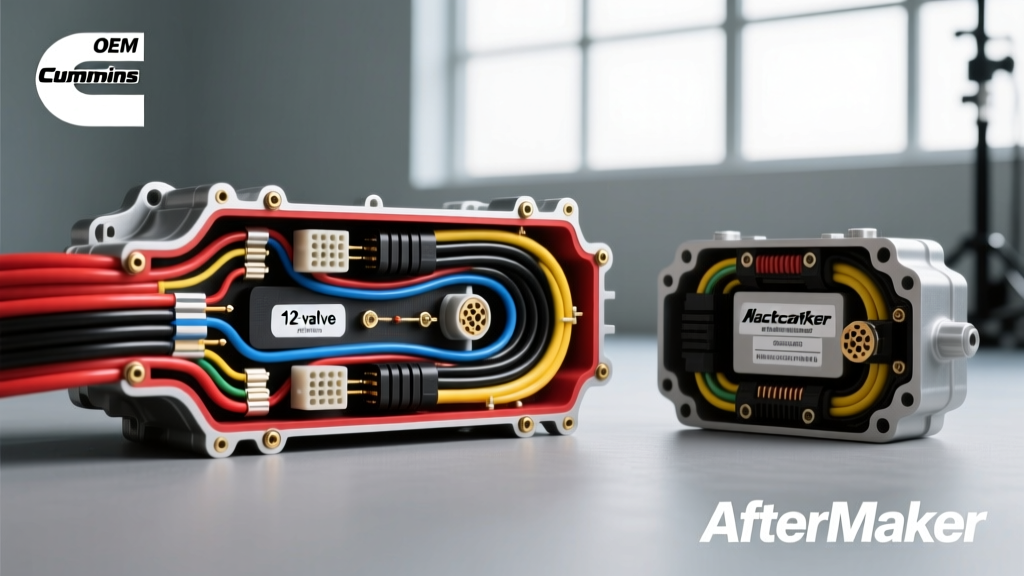
The Evolution of Cummins Engine Wiring Architecture
Selecting the correct Cummins engine wiring harness requires a deep understanding of the platform's evolution from a purely mechanical powerplant to a highly complex, CAN-bus-integrated common rail system. Whether you are restoring a 1st-generation Dodge W250, replacing a brittle OEM harness on a 3rd-generation Ram 2500, or fabricating a standalone setup for a Cummins-swapped Jeep Wrangler, the harness is the central nervous system of your build. A poor selection leads to voltage drops, EMI (Electromagnetic Interference) sensor noise, and catastrophic ECM failures.
This guide compares OEM Mopar replacements against premium aftermarket and standalone swap harnesses, breaking down the technical specifications, wire gauges, and connector requirements across the 5.9L and 6.7L Cummins generations.
OEM vs. Aftermarket Cummins Harness Comparison
When sourcing a Cummins engine wiring harness, buyers typically choose between dealer-direct OEM replacements, aftermarket direct-fit replacements, and standalone swap harnesses. Below is a technical comparison of the primary options available on the market.
| Manufacturer / Type | Best Application | Wire Jacket Standard | Connector Type | Price Tier |
|---|---|---|---|---|
| Mopar OEM Replacement | Factory restoration, daily drivers | Standard PVC (105°C) | Packard Weather-Pack / Metri-Pack | $$$$ |
| Painless Performance Standalone | Engine swaps, rock crawlers, race trucks | TXL Cross-Linked (125°C) | Deutsch DT / Weather-Pack | $$$ |
| Current Performance Wiring | Custom chassis, marine, industrial swaps | GXL / TXL High-Temp | Bosch Motronic / Deutsch | $$$$ |
| Aftermarket Direct-Fit (e.g., Dorman) | Budget OEM replacement, patch repairs | Standard PVC | OEM Equivalents | $$ |
For factory restorations, Mopar OEM is the only choice to maintain exact firewall grommet fits and factory tape-wrap routing. However, for high-heat environments or engine swaps, aftermarket harnesses built to SAE J1128 standards using TXL (Thin-wall Cross-linked) wire provide vastly superior resistance to under-hood heat and abrasion.
Generation-Specific Harness Selection & Pinouts
1st Gen (1989-1998): 12-Valve & Early 24-Valve Mechanical Era
The 12-valve 5.9L Cummins (P7100 injection pump) requires a remarkably simple harness. Because the engine is mechanically governed, the wiring primarily handles high-amperage power distribution rather than data transmission.
- Grid Heater Circuit: The intake grid heaters draw upwards of 100 amps each. The harness must utilize a minimum of 8 AWG wire with heavy-duty ring terminals and mega-fuse links.
- Fuel Shutoff Solenoid: This circuit requires a dual-stage relay setup. The pull-in coil requires 10 AWG wire to handle the initial 40-amp surge, while the hold-in coil operates on 14 AWG.
- Alternator & Starter: Standard 3-pin alternator connectors and heavy-gauge starter cables. Upgrading to a 140-amp Denso alternator requires upgrading the main charge wire to 4 AWG.
2nd Gen (1998.5-2002): 24-Valve VP44 & ECM Integration
The introduction of the Bosch VP44 rotary injection pump and the Cummins ECM drastically increased harness complexity. The harness now features a 50-pin ECM connector and shielded twisted-pair wiring for early CAN-bus communication.
- APPS (Accelerator Pedal Position Sensor): The most common failure point on 2nd-gen trucks. The APPS harness routes near the valve cover and is prone to chafing. It utilizes three critical circuits: 5V Reference (Pin 1, Violet/White), Signal Return (Pin 2, Orange/Dark Blue), and Sensor Ground (Pin 3, Black/Light Blue). All three should be 18 AWG.
- VP44 Main Connector: A 12-pin Bosch connector that suffers from pin fretting and corrosion. When replacing the harness, ensure the new connector utilizes gold-plated terminals to prevent voltage drop to the VP44's internal PSG (Pump Control Module).
3rd Gen (2003-2007): 5.9L Common Rail Complexity
The 5.9L Common Rail (CR) engine relies on the CP3 high-pressure fuel pump and Bosch solenoid injectors. The harness must handle high-current PWM (Pulse Width Modulation) signals and complex CAN-C bus networking with the Dodge PCM and TIPM (Totally Integrated Power Module).
- Injector Driver Circuits: The ECM fires the injectors using high-voltage, high-current pulses. The injector harness branches require 16 AWG or 14 AWG wire to prevent voltage drop and resistive heating.
- FCA (Fuel Control Actuator): Located on the CP3 pump, the FCA regulates rail pressure via a PWM signal. This circuit requires 18 AWG shielded wire to prevent EMI from the injector driver circuits from corrupting the FCA signal, which would result in erratic rail pressure.
Critical Wire Gauge & Connector Specifications
When fabricating a custom harness or repairing an OEM Cummins engine wiring harness, adhering to strict AWG and connector specifications is non-negotiable. The table below outlines the baseline specifications for critical 5.9L Cummins circuits.
| Circuit Function | Wire Gauge (AWG) | OEM Color Code (Typical) | Connector Standard |
|---|---|---|---|
| Grid Heater Supply (12V) | 8 AWG | Red | Ring Terminal / Mega Fuse |
| ECM Constant Battery (B+) | 10 AWG | Red / Pink | 50-Pin ECM (Metri-Pack 280) |
| Injector Driver (+ / -) | 14 - 16 AWG | White / Dark Green | Bosch EV1 / Jetronic |
| CAN-C Bus (High / Low) | 20 AWG (Shielded Pair) | White / Gray | Deutsch DT or Splice Sleeve |
| MAP Sensor Signal | 18 AWG | Dark Green / Red | 3-Pin Packard Weather-Pack |
For all sensor and data circuits, we highly recommend utilizing Bosch Motorsport or Deutsch DT connectors over standard push-fit connectors. The positive locking mechanism and silicone rear seals of Deutsch connectors completely eliminate moisture ingress, a primary cause of ECM corrosion on off-road and agricultural Cummins applications.
Engine Swap Considerations: Standalone vs. Integrated
When performing a Cummins swap into a non-Dodge chassis (e.g., Ford Super Duty, Jeep JK, or a custom tube chassis), utilizing a factory Dodge harness is a massive liability. The factory harness is intertwined with the Dodge PCM, CTM (Central Timer Module), and SKIM (Sentry Key Immobilizer). If the ECM does not receive the correct VIN-matched security handshake via the CAN bus, it will disable the injector drivers.
The Standalone Solution:
Companies like Painless Performance and Current Performance offer standalone Cummins harnesses that strip away the Dodge-specific chassis wiring. These harnesses provide:
- ECM Power & Ground: Direct, fused connections to the battery and chassis.
- Sensor Breakouts: Clean, labeled pigtails for MAP, IAT, ECT, and APPS sensors.
- Relay Control: Built-in relays for the fuel lift pump, grid heaters, and starter solenoid, triggered by a simple ignition switch.
- CAN-Bus Spoofing: Some premium standalone harnesses include a CAN-bus simulator module that tricks the Cummins ECM into believing it is connected to a valid Dodge PCM, completely bypassing the SKIM immobilizer without requiring dealer-level ECM reflashing.
Troubleshooting Common Harness Failure Modes
Even the best Cummins engine wiring harness will fail if routed improperly. Be vigilant for these common failure modes:
- Valve Cover Chafing (2nd & 3rd Gen): The main harness branch rests against the sharp edge of the cast-iron valve cover. Engine torque roll causes the harness to rub through the loom, shorting the 5V reference to ground. Fix: Wrap the harness in high-temp silicone self-fusing tape and secure it with aluminum P-clamps away from the casting.
- Lift Pump Voltage Drop: The factory Carter/In-Tank lift pump wiring uses 14 AWG wire over a long distance, resulting in a 2-3 volt drop. The pump receives 10.5V instead of 13.5V, leading to low fuel pressure and VP44/CP3 starvation. Fix: Install a 30-amp relay near the fuel tank, using 10 AWG wire directly from the battery to the pump, triggered by the factory harness.
- Alternator Back-Feed: When upgrading to high-output alternators (200A+), the factory 10 AWG charge wire becomes a bottleneck, melting the harness tape and potentially causing an electrical fire. Fix: Run a dedicated 1/0 AWG welding cable from the alternator B+ post directly to the starter battery positive terminal, bypassing the factory harness entirely.
Final Selection Verdict
If you are keeping your Dodge Ram factory-original, bite the bullet and purchase the OEM Mopar harness; the firewall pass-through and dash integration are impossible to replicate cleanly. However, if you are building a swap, a race truck, or an off-road rig, invest in a standalone, TXL-jacketed harness from a reputable motorsport wiring manufacturer. The upfront cost is offset by the elimination of CAN-bus nightmares, superior heat resistance, and the ease of troubleshooting clearly labeled, color-coded circuits.