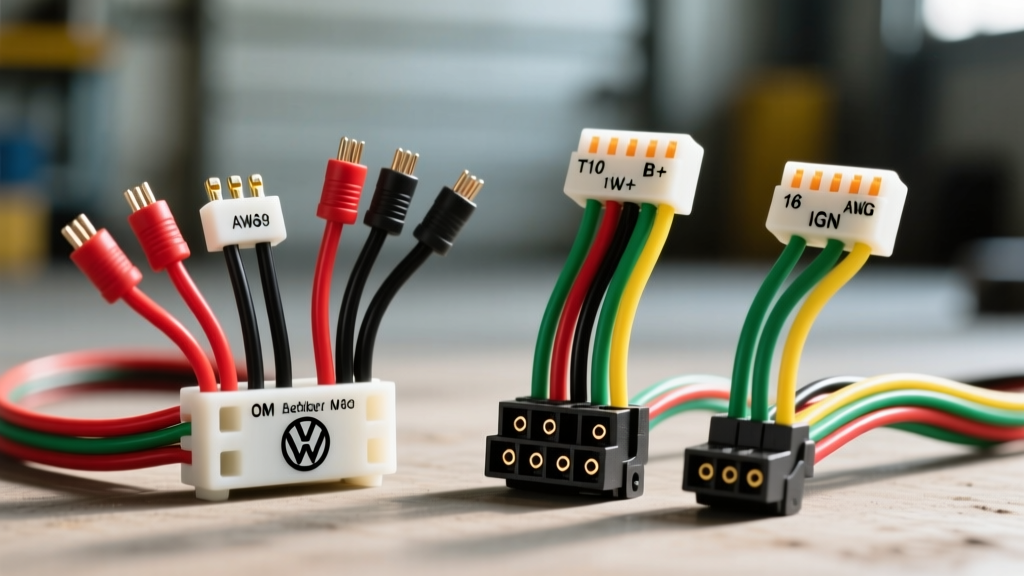
The 'One-Year-Only' Challenge of the 1969 VW Beetle Loom
In the world of classic Volkswagen restoration, the 1969 model year represents a notorious bottleneck for electrical specialists. Unlike the relatively stable wiring configurations of the 1967-1968 or 1970-1972 eras, the 1969 VW Beetle wiring harness is a unique, one-year-only proposition. This transitional year introduced the steering column lock mechanism, a dashboard-mounted 4-way hazard flasher switch, and specific wiper motor relay configurations that render earlier or later harnesses incompatible without extensive splicing.
When sourcing a replacement 1969 VW Beetle wiring harness, restorers are faced with a fragmented market ranging from exacting German-manufactured OEM reproductions to budget-friendly offshore kits, and fully modernized custom universal looms. Selecting the wrong harness can lead to catastrophic voltage drops, incorrect terminal pinouts at the ignition switch, and persistent grounding failures. This guide breaks down the technical specifications, product tiers, and installation realities of 1969 Beetle harness options to ensure your classic runs safely and reliably.
Product Comparison: OEM vs. Aftermarket vs. Custom Upgraded
Not all wiring harness kits are created equal. The primary differentiators lie in the copper stranding quality, jacket material (PVC vs. XLPE), adherence to DIN color codes, and the precision of the 4mm bullet connector crimps.
| Feature | OEM German (e.g., Wolfsburg West) | Standard Aftermarket (e.g., EMPI/Topran) | Custom Upgraded (e.g., Painless/American Autowire) |
|---|---|---|---|
| Wire Jacket | Original spec PVC, cloth-taped | Thin PVC, vinyl-taped | GXL/TXL Cross-linked Polyethylene |
| Color Accuracy | 100% DIN 72551 accurate | Mixed (often uses US standard colors) | Modern US automotive color codes |
| Connectors | Pre-crimped 4mm brass bullets | Pre-crimped (often loose or poorly seated) | Modern blade relays, Maxi-fuses, bulkhead grommets |
| Best Application | Concours / Stock Restorations | Budget Driver / Roller Projects | Restomods, Engine Swaps, High-Draw Accessories |
Option 1: Genuine German Reproductions
For purists, German-made harnesses (often sourced through specialized vendors like Wolfsburg West) are the gold standard. These looms utilize the exact PVC formulations and cloth braided loom tape specified in the original Bentley Volkswagen Service Manual. The wire gauges strictly follow DIN standards, and the 1969-specific hazard switch (E3) multi-plug is pinned exactly to factory schematics. However, they retain the original 30-amp glass fuse architecture and 4mm bullet connectors, which are prone to oxidation if not maintained.
Option 2: Budget Aftermarket Kits
Offshore-manufactured harnesses are significantly cheaper but introduce severe technical compromises. The wire jacket is often a lower-grade, brittle PVC that cracks under engine bay heat. More critically, these kits frequently substitute DIN wire colors with standard US automotive colors (e.g., using Pink instead of Black/Red for the starter solenoid), making troubleshooting against factory wiring diagrams nearly impossible. The pre-crimped bullet connectors are often sized incorrectly, leading to loose fits in the fuse box and voltage drop across the dashboard.
Option 3: Custom Universal Upgrades
If your 1969 Beetle is a restomod featuring an electric fuel pump, HID lighting, or a modern stereo, the factory wiring is inadequate. Custom kits replace the fragile glass fuse box with a modern blade-fuse block and utilize GXL/TXL wire. According to SAE J1128 standards, TXL wire features a cross-linked polyethylene insulation that withstands temperatures up to 125°C (257°F), vastly outperforming the 80°C limit of standard VW PVC wire. These kits require custom pinning and routing but provide the necessary amperage headroom for modern accessories.
1969 Specific Terminal IDs and Wire Color Codes
When verifying your 1969 VW Beetle wiring harness, you must cross-reference the DIN 72551 color codes and VW terminal (Klemme) designations. The 1969 ignition switch, tied to the new steering column lock, relies on specific terminal routing that differs from the 1968 dash-mounted switch.
| Terminal ID | Function | DIN Color Code | US AWG Equiv. | DIN mm² |
|---|---|---|---|---|
| 30 | Constant Battery Power | Red (RT) | 10 AWG | 6.0 mm² |
| 15 | Switched Ignition Power | Black (SW) | 14 AWG | 2.5 mm² |
| 50 | Starter Solenoid | Black/Red (SW/RT) | 14 AWG | 2.5 mm² |
| X | Load Reduction (Wipers/Heater) | Black/Yellow (SW/GE) | 14 AWG | 2.5 mm² |
| 56a | Headlight High Beam | White (WS) | 14 AWG | 2.5 mm² |
| 56b | Headlight Low Beam | Yellow (GE) | 14 AWG | 2.5 mm² |
Critical Failure Modes & Connector Specifications
The 4mm Bullet Connector Dilemma
The entire VW Type 1 electrical system relies on 4mm bullet connectors for modular splicing. The most common failure mode in restored Beetles is voltage drop at these junctions, manifesting as dim headlights or erratic wiper operation. Never solder bullet connectors. Solder wicks into the copper stranding, creating a rigid point that suffers from fatigue cracking under engine vibration. Instead, use a dedicated ratcheting crimp tool (such as the Hozan P-706) to compress the brass ferrule. Apply a small amount of dielectric grease inside the female receiver to prevent galvanic corrosion, a frequent issue when dissimilar metals (brass connectors and copper wire) are exposed to moisture in the front trunk pan.
The 1969 Hazard Switch and Wiper Motor Pinouts
The 1969 dashboard introduced the 4-way hazard switch (E3). This switch physically interrupts the turn signal flasher circuit and routes power directly from Terminal 30 to the left and right indicator circuits simultaneously. When installing an OEM 1969 harness, ensure the multi-plug for the hazard switch is fully seated; a loose pin on the '49a' (flasher output) terminal will result in hazards that illuminate but do not flash. Furthermore, the 1969 wiper motor utilizes a specific park-switch ground path. If the wiper motor fails to park correctly and stops mid-windshield, verify the Brown (BR) ground wire routing from the wiper motor chassis to the dashboard grounding stud.
Engine Grounding and the Rubber Mount Isolation
Unlike unibody American V8s, the VW Beetle engine and transmission are mounted to the chassis via thick rubber isolation mounts. This means the engine block has no inherent electrical ground path to the battery. A dedicated braided copper ground strap (minimum 10 AWG, preferably 8 AWG) must connect the transmission bellhousing to the chassis crossmember. Failure to install this strap forces the starter motor to seek a ground through the throttle cable or heater bowden tubes, resulting in melted cables, arcing, and catastrophic harness fires.
Expert Verdict: Which Harness Should You Buy?
If you are executing a concours-correct restoration and retaining the stock 30-amp generator and 12V lighting, invest in a genuine German-made 1969 VW Beetle wiring harness. The adherence to DIN color codes will save you hours of troubleshooting when referencing TheSamba VW Archives and factory schematics.
However, if you are upgrading to an alternator, adding LED lighting, or installing modern audio equipment, abandon the OEM glass-fuse architecture. Opt for a custom universal harness kit utilizing TXL wire and modern blade fuses. By integrating headlight relays directly at the front beam and running dedicated 10 AWG power feeds from the alternator to a secondary fuse block, you eliminate the inherent voltage drop of the 50-year-old factory design while maintaining the classic aesthetic of the 1969 interior.