The Role of 18 AWG in Automotive Electrical Systems
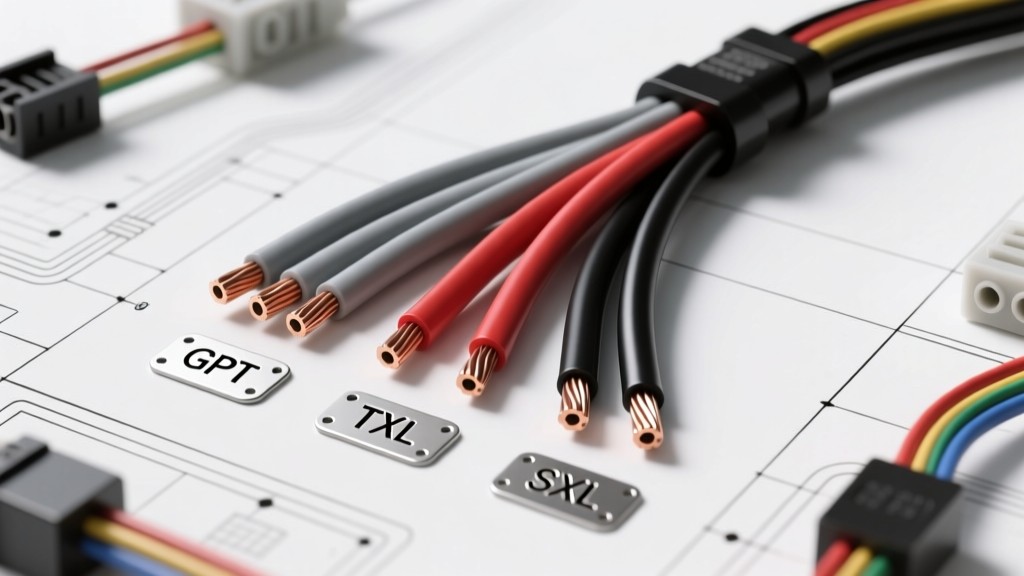
In automotive electrical architecture, 18 gauge wire serves as the critical workhorse for low-current circuits, sensor networks, and relay triggers. While heavier gauges like 10 AWG or 8 AWG dominate the high-amperage charging and starter circuits, 18 AWG is the backbone of the vehicle's nervous system. It is the standard size for 5-volt reference signals, ground returns, CAN-bus lines, and low-draw accessory triggers. However, not all 18 gauge wire is created equal. Selecting the wrong insulation type or conductor material can lead to melted harnesses, voltage drop-induced sensor failures, and intermittent electrical gremlins. This comprehensive selection guide compares the primary automotive wire types—GPT, TXL, and SXL—to help you choose the exact specification for your project.
SAE J1128 Standards: GPT vs. TXL vs. SXL
The Society of Automotive Engineers (SAE) defines the strict parameters for low-tension primary automotive cables under the SAE J1128 standard. Understanding the differences in insulation chemistry and wall thickness is vital for ensuring long-term reliability, especially in high-heat engine bays.
GPT (General Purpose Thermoplastic)
GPT wire features a polyvinyl chloride (PVC) thermoplastic insulation. It is the most common and economical wire found in aftermarket automotive kits, marine applications, and interior cabin wiring. GPT is rated for continuous operation up to 105°C (221°F). While adequate for interior lighting, gauge clusters, and under-dash accessories, GPT insulation will soften, shrink, and eventually melt if routed too close to exhaust headers or turbochargers. Its standard wall thickness is approximately 0.023 inches, making it slightly bulkier than modern OEM cross-linked alternatives.
TXL (Thin-Wall Cross-Linked)
TXL wire utilizes cross-linked polyethylene (XLPE) insulation. The cross-linking process alters the polymer structure, transforming it from a thermoplastic into a thermoset material. This means TXL will not melt or drip when exposed to extreme heat or when soldering very close to the termination point. Rated for 125°C (257°F), TXL is the undisputed OEM standard for modern engine bay harnesses. The 'thin-wall' designation means the insulation is only about 0.016 inches thick. This reduces the overall harness diameter and weight, allowing for tighter bends and easier routing through crowded firewall grommets.
SXL (Standard-Wall Cross-Linked)
SXL shares the same 125°C XLPE chemistry as TXL but features a thicker, standard insulation wall (approximately 0.023 inches). SXL is predominantly used in heavy-duty commercial trucks, agricultural equipment, and off-road vehicles where the wiring harness is subjected to severe mechanical abrasion, vibration, and exposure to harsh chemicals. For standard passenger vehicles, SXL is often overkill, as the added bulk makes harness wrapping and loom insertion more difficult.
18 Gauge Wire Technical Specification Chart
| Property | GPT (Thermoplastic) | TXL (Thin-Wall XLPE) | SXL (Standard XLPE) |
|---|---|---|---|
| Insulation Material | PVC | Cross-Linked Polyethylene | Cross-Linked Polyethylene |
| Max Temperature Rating | 105°C (221°F) | 125°C (257°F) | 125°C (257°F) |
| Nominal Insulation Wall | 0.023 inches | 0.016 inches | 0.023 inches |
| Approximate Outer Diameter | 0.092 inches | 0.078 inches | 0.092 inches |
| Standard Strand Count | 16 x 30 AWG | 16 x 30 AWG | 16 x 30 AWG |
| Resistance @ 20°C | 6.385 Ω / 1000 ft | 6.385 Ω / 1000 ft | 6.385 Ω / 1000 ft |
| Chassis Ampacity (Short Run) | 10 Amps | 10 Amps | 10 Amps |
| Harness Ampacity (Bundled) | 5 - 7 Amps | 5 - 7 Amps | 5 - 7 Amps |
Application Selection Matrix
Sensor Circuits and ECU Signals
When wiring sensitive engine management sensors, 18 AWG TXL is the mandatory choice. Consider the Throttle Position Sensor (TPS) on a Ford 4.6L V8. The circuit relies on three wires: a 5V reference (Brown/White), a signal return (Gray/Red), and a sensor ground (Black/Yellow). All three circuits typically utilize 18 AWG wire. Because these signals operate on low voltage and low current (usually under 0.5 Amps), voltage drop is minimal, but heat resistance is critical. If you use GPT wire near the throttle body, radiant heat from the intake manifold can cause the PVC insulation to become brittle and crack, leading to short circuits against the engine block and immediate ECU limp-mode triggers. Always use TXL and route these wires inside a split nylon loom or braided sleeving.
Relay Triggers and Low-Current Accessories
For triggering 30A or 40A automotive relays (such as Bosch-style 5-pin relays), 18 AWG wire is perfectly suited for Pins 85 and 86. These coils typically draw between 150mA and 300mA. Even on a long 20-foot run to a rear-mounted auxiliary light relay, the voltage drop on 18 AWG copper will be negligible (less than 0.2V). In these interior or under-chassis applications where ambient temperatures rarely exceed 80°C, standard GPT wire is an acceptable and cost-effective choice. However, if the relay is mounted in the engine bay to control cooling fans or fuel pumps, upgrade the trigger wires to TXL to survive the under-hood thermal cycling.
Voltage Drop Calculations for 18 AWG
A common mistake in custom automotive wiring is ignoring voltage drop over distance. The resistance of 18 AWG pure copper is 6.385 ohms per 1,000 feet. If you are wiring a heated oxygen sensor ground circuit that draws 2 Amps, and the total wire length (positive and negative combined) is 30 feet, the voltage drop is calculated as follows:
Voltage Drop = (2 x Length x Current x Resistance) / 1000
Using our variables: (2 x 15ft one-way x 2A x 6.385) / 1000 = 0.38 Volts. While a 0.38V drop on a 12V circuit is acceptable, if that same 18 AWG wire was used for a 5V ECU reference signal drawing the same current, a 0.38V drop represents a massive 7.6% loss, which will skew sensor readings and cause drivability issues. Always verify your current draw before committing to 18 AWG for long harness runs.
The CCA (Copper Clad Aluminum) Trap
When sourcing 18 gauge wire, you will inevitably encounter CCA (Copper Clad Aluminum) wire, often sold at a steep discount. CCA wire features an aluminum core with a thin copper coating. While it looks like copper when stripped, aluminum has roughly 61% of the conductivity of pure copper. Consequently, an 18 AWG CCA wire performs electrically like a 20 AWG or even 22 AWG pure copper wire. In automotive applications, CCA is highly susceptible to galvanic corrosion when crimped to copper or brass terminals, especially in the presence of moisture and road salt. This corrosion increases resistance over time, leading to dim headlights, weak relay triggers, and failed sensor circuits. Never use CCA wire in any automotive application. Always verify that the wire spool is stamped with 'Oxygen-Free Copper' (OFC) or bare copper stranding.
Termination, Crimping, and Weather-Sealing
The reliability of an 18 AWG circuit is only as strong as its termination. Modern OEM harnesses utilize open-barrel crimp terminals, which provide a superior gas-tight connection compared to traditional closed-barrel ring terminals. When terminating 18 AWG wire into a Delphi Metri-Pack 150 series connector, ensure you are using the correct crimp die. The 18 AWG wire should be crimped so that the wire strands are flush or protrude slightly (no more than 1mm) past the conductor crimp tabs. The insulation crimp tabs must securely grip the wire jacket without piercing it.
For weather-sealed connectors like the Weather-Pack or Metri-Pack 280 series, the silicone cavity seal is critical. 18 AWG wire typically requires a seal designed for a wire insulation diameter of 0.078 to 0.092 inches. If the seal is too loose, moisture will wick into the connector via capillary action, leading to green copper oxide buildup and terminal failure. Always use a dedicated seal insertion tool to push the seal past the terminal's locking tangs, and use cavity plugs to seal any unused connector holes to maintain the harness's IP67 water resistance rating.