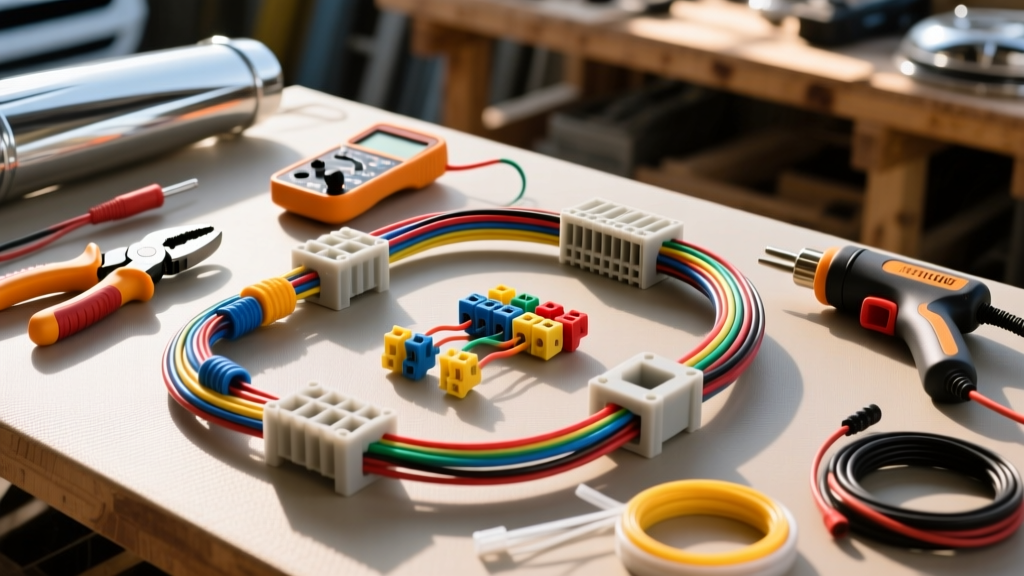
Evaluating a Custom Wiring Harness for Pontoon Boat Applications
Designing or replacing a main DC wiring harness for pontoon boat vessels requires a fundamentally different approach than standard automotive wiring. Pontoon boats feature aluminum hulls, which are highly susceptible to galvanic corrosion, and their expansive deck layouts result in exceptionally long wire runs. Whether you are integrating a new navigation light array, upgrading to a high-output alternator, or repowering with an automotive-derived marine V8 (such as a 5.7L Mercruiser or an LS-based marine swap), the harness must comply with strict marine environmental standards. This analysis breaks down the cost differentials between pre-assembled marine harness kits and custom-fabricated solutions, while detailing the specialized tooling required to execute a reliable, ABYC-compliant installation.
Pre-Assembled Marine Kits vs. Custom Fabrication Costs
Many boat owners opt for universal pre-assembled pontoon harness kits to save time. These kits typically feature untinned copper wire, basic vinyl insulation, and standard automotive blade fuses. While they may suffice for small, inland-water runabouts, they frequently fail in harsh marine environments due to moisture wicking and terminal oxidation. Building a custom wiring harness for pontoon boat applications using marine-grade materials costs more upfront but eliminates the premature failure modes associated with generic automotive kits.
| Component Category | Universal Pre-Assembled Kit (24ft Pontoon) | Custom ABYC-Compliant Build |
|---|---|---|
| Main Wire (16 AWG to 8 AWG) | $85 (Untinned Copper, PVC) | $210 (UL 1426 Tinned Copper, XLPE) |
| Overcurrent Protection | $30 (Standard Automotive Blade Block) | $115 (Blue Sea Systems ST Blade w/ Cover) |
| Connectors & Terminals | $25 (Vinyl Butt Splices, Nylon Rings) | $140 (Adhesive-Lined Heat Shrink, Deutsch DT) |
| Loom & Cable Management | $15 (Split Loom Tubing) | $65 (Marine Braided Sleeving, SS P-Clamps) |
| Total Estimated Material Cost | $155 | $530 |
While the custom build represents a 240% increase in material costs, the use of tinned copper and adhesive-lined heat shrink creates a waterproof, corrosion-proof seal that extends the lifespan of the harness from an average of 4 years to over 15 years. For detailed material specifications, refer to the Ancor Marine Wire Standards regarding UL 1426 and SAE J1171 compliance.
Essential Tooling for Marine-Grade Harness Fabrication
You cannot reliably build a marine harness using standard automotive crimping pliers. The vibration and moisture inherent to pontoon boats demand gas-tight, waterproof terminations. The following tooling is mandatory for fabricating a professional-grade wiring harness for pontoon boat electrical systems.
- Ratcheting Marine Crimper (Insulated Terminals): Tools like the Ancor 300015 or IWISS IWS-3014J are required. These crimpers feature specific die profiles for 22-10 AWG insulated heat-shrink terminals. The ratcheting mechanism ensures the terminal barrel is compressed to the exact factory specification, preventing the wire from pulling out under the tension of a rocking boat.
- Precision Wire Strippers: Tinned copper strands are more brittle than bare copper. Using dull or improper strippers will nick the outer strands, creating a weak point that will snap under vibration. Use automatic wire strippers calibrated specifically for the outer diameter of marine-grade XLPE insulation (e.g., Knipex MultiStrip 10).
- Heat Gun with Reflector Nozzle: A standard heat gun will scorch the wire insulation before the adhesive core melts. A heat gun equipped with a flux/reflector nozzle (such as the Steinel HL 2020 E with a specialized reflector attachment) wraps heat evenly around the terminal, ensuring the inner polyamide adhesive melts and flows out the ends of the heat shrink barrel, creating a waterproof seal.
- Deutsch DT Crimp Tool: For high-amperage accessories like windlasses, livewell pumps, or engine ECM power feeds, Deutsch DT series connectors are the marine standard. A dedicated 4-way indent crimp tool (e.g., HX-48B) is required to crimp the solid core pins without deforming the retention tangs.
ABYC E-11 Wire Sizing and Voltage Drop Considerations
The most critical mistake made when adapting automotive wiring practices to a pontoon boat is ignoring voltage drop. A 24-foot pontoon boat requires a 48-foot round-trip wire run from the battery to the helm and back to the ground bus. According to the American Boat & Yacht Council (ABYC) standard E-11, circuits must be sized not just for ampacity, but to maintain a voltage drop of less than 3% for critical navigation lights and engine electronics, and less than 10% for general accessories.
Marine AWG Sizing and Color Code Reference
Automotive color codes do not apply to marine vessels. Using standard automotive red/black wiring in a pontoon harness can lead to catastrophic troubleshooting errors and violates ABYC safety codes. The table below outlines the mandatory ABYC color codes and minimum AWG sizing for common pontoon circuits based on a 48-foot round trip at a 3% voltage drop.
| Circuit Application | ABYC Wire Color | Max Load (Amps) | Required AWG (48ft Run @ 3% Drop) |
|---|---|---|---|
| DC Main Battery Feed | Red | 120A | 2/0 AWG |
| Engine ECM / Ignition | Purple (Ignition) / Yellow (Ground) | 15A | 10 AWG |
| Navigation / Anchor Lights | Dark Blue | 5A | 12 AWG |
| Bilge Blower Motor | Yellow w/ Red Stripe | 12A | 10 AWG |
| DC Ground Returns | Yellow | Varies | Match or exceed positive feed |
For precise voltage drop calculations tailored to your specific pontoon layout and alternator output, utilize the Blue Sea Systems Wire Size Calculator to ensure your custom harness prevents dimming lights and ECM brownouts at the helm.
Integration with Automotive-Derived Marine Engines
Many modern pontoon repowers utilize automotive-derived engines, such as the GM 5.7L V8 (Mercruiser) or custom LS marine swaps. The engine wiring harness for these setups is heavily sealed but requires integration with the boat's main DC harness at the helm and the engine-mounted breaker block.
When adapting an LS marine harness to a pontoon's main DC bus, never splice directly into the engine's ECM constant power or ignition feeds using butt connectors. Instead, route a dedicated 8 AWG tinned copper feed from the pontoon's main Blue Sea fuse block to a marine-rated Bosch or Hella relay mounted in the engine compartment. Use the engine's existing ignition switch wire (Purple, 16 AWG) to trigger the relay coil. This isolates the high-amperage EFI fuel pump and main ECM relays from the helm's delicate ignition switch, preventing voltage drop across the 20-foot run to the stern and protecting the helm switch from arcing and melting.
Common Failure Modes in Pontoon Electrical Systems
Even with premium materials, improper routing can destroy a custom wiring harness for pontoon boat installations. Be aware of these real-world failure modes:
- Aluminum Hull Galvanic Corrosion: If a copper wire terminal touches the aluminum pontoon log or deck framing, and moisture is present, a galvanic cell is created. The aluminum will rapidly corrode, and the circuit will fail. All harness runs must be suspended using UV-resistant stainless steel P-clamps lined with rubber cushions, maintaining at least a 1-inch clearance from bare aluminum.
- Capillary Action Moisture Wicking: If a wire is terminated in the bilge or near the deck drain, and the heat shrink seal fails, water will wick up inside the wire insulation via capillary action, eventually reaching the helm switch and corroding it from the inside out. Always create a 'drip loop' before any termination point located below the waterline or deck drains.
- Vibration Fatigue at Bulkheads: Pontoons flex significantly in rough water. Where the main harness passes through the aluminum deck or console bulkheads, it must be protected by a marine-grade neoprene grommet and secured with cable ties on both sides of the penetration to prevent the aluminum edge from sawing through the XLPE insulation over time.
By investing in the correct ratcheting tooling, strictly adhering to ABYC color codes, and utilizing UL 1426 tinned copper, your custom pontoon harness will outlast the vessel's upholstery and decking, providing flawless electrical reliability for years to come.