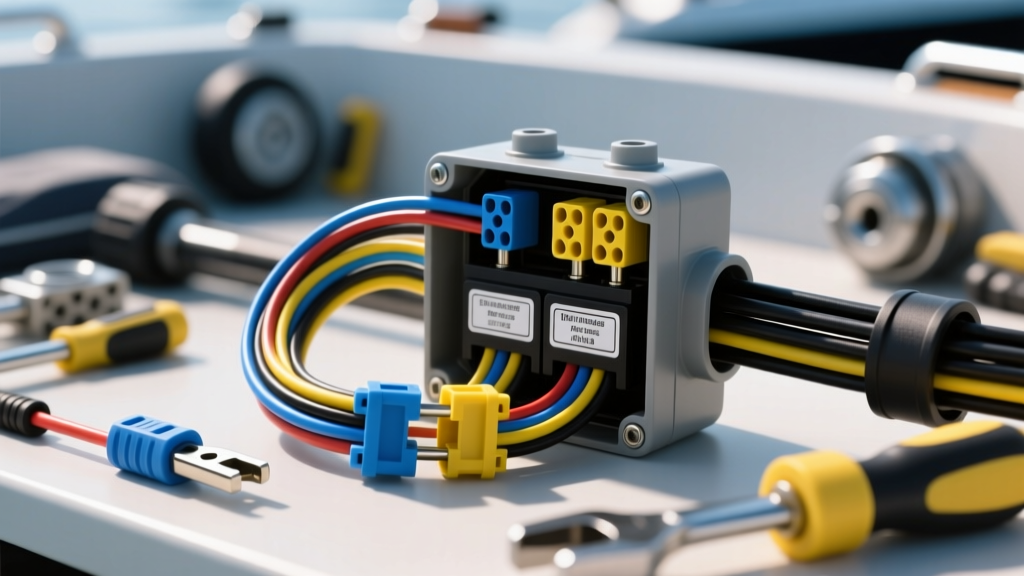
The Hidden Dangers of Improper Boat Trailer Wiring
When selecting and installing a wiring harness for a boat trailer, the marine environment introduces extreme variables that standard automotive wiring simply cannot handle. Saltwater intrusion, UV degradation, constant vibration, and thermal shock from submersion create a high-risk environment for electrical fires, short circuits, and catastrophic lighting failures. According to the National Marine Manufacturers Association (NMMA), electrical faults are a leading cause of trailering incidents and marina fires. Yet, many boaters treat trailer wiring as an afterthought, relying on cheap, non-marine-grade kits and outdated installation methods.
As automotive and marine electrical experts, we have diagnosed hundreds of failed trailer harnesses. Below, we break down the most common, dangerous mistakes made when wiring a boat trailer, complete with SAE specifications, AWG sizing charts, and actionable safety warnings to keep your rig on the road and out of the ditch.
Mistake #1: Ignoring SAE J1128 Color Code Standards
One of the most frequent errors we see in the field is the use of arbitrary wire colors or repurposing old automotive harnesses that do not adhere to the SAE J1128 Low Tension Primary Cable standards for trailer wiring. Miswiring a 4-way or 5-way flat connector doesn't just cause your turn signals to act as brake lights; it can send 12V continuous power directly into a low-resistance LED ground circuit, melting the harness and potentially igniting the tow vehicle's rear fascia.
Standard 4-Way and 5-Way Flat Pinout & Color Chart
| Wire Color | Function | 4-Way Pin | 5-Way Pin | Min. AWG (Marine) |
|---|---|---|---|---|
| White | Ground Return | Pin 1 (Exposed) | Pin 1 | 16 AWG (12 AWG for brakes) |
| Brown | Tail / Running Lights | Pin 2 | Pin 2 | 18 AWG (16 AWG preferred) |
| Yellow | Left Turn / Stop | Pin 3 | Pin 3 | 18 AWG |
| Green | Right Turn / Stop | Pin 4 | Pin 4 | 18 AWG |
| Blue | Reverse Lockout / Aux | N/A | Pin 5 (Center) | 14 AWG (Solenoid load) |
Safety Warning: Never use the trailer frame as the sole ground return for the harness. Always run a dedicated White ground wire from the trailer tongue directly back to the tow vehicle's chassis ground.
Mistake #2: Undersizing AWG for Marine Environments
Most off-the-shelf, big-box-store trailer harnesses use 20 AWG or 18 AWG wire to save on copper costs. While 18 AWG might suffice for a 10-foot utility trailer with two incandescent bulbs, it is dangerously undersized for a 22-foot triple-axle boat trailer. The marine environment demands higher ampacity margins due to voltage drop over long wire runs and the increased resistance caused by minor corrosion at the terminals.
When voltage drops below 10.5V at the rear marker lights, LED drivers will flicker or fail to illuminate, leaving you legally blind on the highway at night. Furthermore, undersized wires generate excess heat under load, which degrades the PVC insulation faster when exposed to summer UV rays and hot asphalt.
AWG Sizing & Maximum Run Length (12V System, 5A Load)
| Wire Gauge (AWG) | Cross-Section (mm²) | Max Run Length (3% Voltage Drop) | Marine Recommendation |
|---|---|---|---|
| 18 AWG | 0.82 mm² | 11 Feet | Reject for boat trailers |
| 16 AWG | 1.31 mm² | 17 Feet | Minimum for short single-axle |
| 14 AWG | 2.08 mm² | 28 Feet | Ideal for standard lighting runs |
| 12 AWG | 3.31 mm² | 45 Feet | Required for electric/surge brake lockout |
Mistake #3: The Grounding Fallacy and Galvanic Corrosion
The single most common cause of boat trailer lighting failure is a poor ground connection. Many DIYers assume that because the trailer ball is metal and touches the coupler, the frame will act as a sufficient ground path. This is a fatal mistake for two reasons:
- Hinge and Pivot Resistance: Folding tongues, surge brake actuators, and suspension leaf springs introduce massive electrical resistance. The ground current cannot reliably pass through grease-packed bearings or rusted pivot points.
- Galvanic Corrosion: Many modern boat trailers are constructed from aluminum to resist saltwater rust. If you terminate a bare copper ground wire directly to an aluminum I-beam using a standard steel screw, you create a galvanic cell. In the presence of moisture (especially saltwater), the aluminum will rapidly oxidize and corrode away, severing the ground connection entirely within a single season.
The Fix: Always use a heavy-duty, adhesive-lined ring terminal on the white ground wire. Attach it to the steel trailer tongue (ahead of the aluminum transition) using a stainless steel bolt, a star washer to bite through paint, and a coating of dielectric grease to seal out moisture.
Mistake #4: Capillary Action and Wire Wicking
Boat trailer harnesses are routinely submerged in lakes, rivers, and oceans. When a harness is submerged, water can enter through a nick in the insulation or a poorly sealed taillight housing. Standard electrical tape or non-adhesive heat shrink will not stop water from traveling up the inside of the wire jacket via capillary action. This phenomenon, known as 'wire wicking,' allows water to travel several feet up the harness, eventually reaching the tow vehicle's 4-way plug and corroding the pins from the inside out.
Safety Warning: Never use standard vinyl electrical tape on a boat trailer harness. UV radiation turns it into a hard, brittle shell that cracks and traps moisture against the copper. Every splice on a boat trailer must be sealed using dual-wall, adhesive-lined marine heat shrink. When heated, the inner wall melts and flows between the copper strands, creating a 100% waterproof, structural bond that blocks capillary wicking.
Mistake #5: Thermal Shock from Halogen Submersion
If your trailer still utilizes incandescent or halogen bulbs, you are risking a catastrophic short circuit every time you back down the boat ramp. Halogen bulbs and their plastic or glass lenses generate immense heat during highway driving. When the hot trailer is suddenly submerged in 60°F water, the extreme thermal shock causes the bulb glass or plastic lens seals to shatter and warp instantly.
Cold water rushes into the hot housing, bridging the contacts and instantly blowing the tow vehicle's lighting fuse. Worse, if the tow vehicle's fuse is oversized (a common DIY 'fix' for blowing fuses), the sudden short circuit can melt the harness insulation and start a fire near the fuel tank area of the tow vehicle. Always upgrade to fully potted, epoxy-sealed LED trailer lights. LEDs run cool, draw a fraction of the amperage (reducing voltage drop), and are immune to thermal shock submersion.
Mistake #6: Bypassing the 5-Way Reverse Lockout Circuit
Most boat trailers utilize surge brakes, which rely on the momentum of the trailer pushing against the tow vehicle to activate the hydraulic brake cylinder. However, when you put the tow vehicle in reverse to back down a ramp, the surge brake will lock up, preventing you from reversing. To solve this, surge brake actuators feature a reverse lockout solenoid.
Many installers mistakenly wire this solenoid to the running lights (Brown wire) or attempt to ground it poorly. The lockout solenoid requires a dedicated 12V feed from the tow vehicle's reverse light circuit, which corresponds to the Blue center pin on a 5-way flat connector. Because solenoids draw a high initial inrush current (often 8 to 12 amps), wiring this to an 18 AWG lighting circuit will cause severe voltage drop, failing to disengage the brakes and potentially melting the wire.
Troubleshooting Decision Tree: Trailer Ground Faults
When diagnosing a wiring harness for a boat trailer that exhibits dim lights, hyper-flashing, or lights that illuminate only when the turn signal is engaged, follow this diagnostic tree:
- Symptom: Brake lights work, but running lights are dim or flicker.
- Cause: High resistance on the Brown (Tail) wire or a shared ground bottleneck.
- Fix: Check for corrosion at the 4-way plug pins. Clean with contact cleaner and apply dielectric grease.
- Symptom: Left turn signal causes the right side marker lights to flash in unison.
- Cause: 'Back-feeding' due to a missing or severed White ground wire at the rear right light assembly.
- Fix: Run a dedicated 14 AWG White ground wire from the rear light housing directly to the main trailer tongue ground lug.
- Symptom: Tow vehicle's trailer lighting fuse blows instantly upon plugging in the harness.
- Cause: Dead short to ground. Usually caused by a crushed wire near the suspension leaf springs or water intrusion inside a submerged taillight housing.
- Fix: Inspect all wire routing points near the axle U-bolts. Replace crushed sections using solder and adhesive-lined heat shrink.
Final Safety Checklist Before Hitting the Boat Ramp
Before towing your vessel to the marina, verify the following critical safety parameters to ensure your wiring harness for a boat trailer is up to the task:
- Circuit Protection: Ensure the tow vehicle's trailer module is protected by the correct amperage fuses (typically 15A for lighting, 30A for auxiliary/brake circuits). Never bypass a blown fuse with a higher amperage rating.
- Strain Relief: Verify that the main harness plug has a physical strain relief loop or zip-tie anchor at the trailer tongue. The weight of the harness should never pull directly on the electrical pins.
- Submersion Test: If using new LED lights, submerge them in a bucket of water while powered on for 10 minutes to verify the epoxy potting and O-ring seals are intact before hitting the highway.
- Corrosion Inhibitor: Apply a generous coat of silicone dielectric grease to both the male and female terminals of the 4-way/5-way connector to prevent galvanic oxidation between the brass and steel pins.
By respecting the unique electrical demands of the marine environment and adhering to SAE standards, you ensure your trailer remains safe, legal, and fully illuminated, regardless of the conditions.