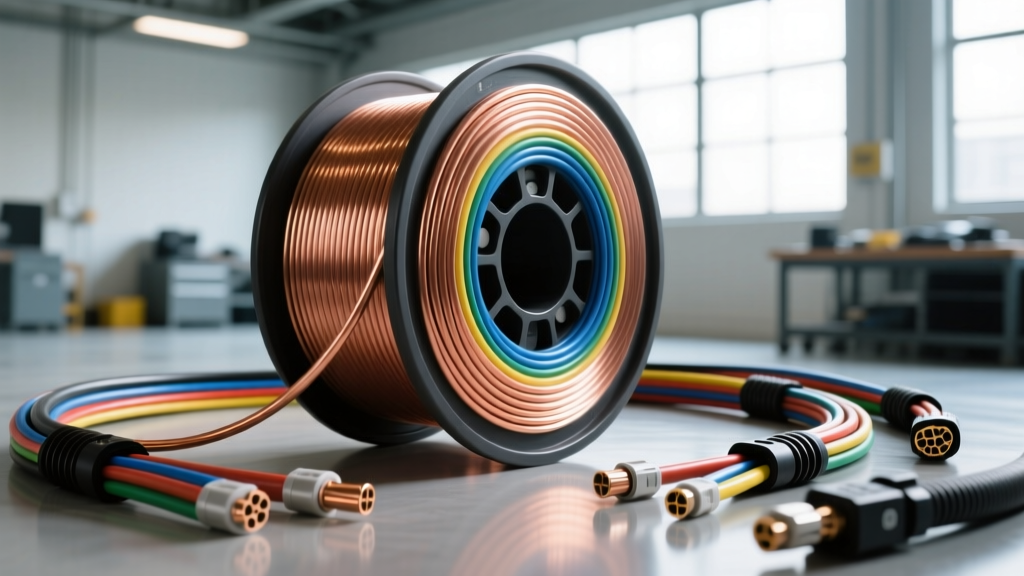
Introduction to High-Current 4 AWG Bulk Wiring
When outfitting a fleet of heavy-duty trucks, executing a complex RV dual-battery build, or wiring a marine windlass, purchasing a 200 ft 4 gauge wire spool is the most cost-effective approach. However, not all 4 AWG cables are created equal. The disparity between Oxygen-Free Copper (OFC) and Copper-Clad Aluminum (CCA) can mean the difference between a reliable 150-amp alternator charge line and a melted insulation fire hazard. In this comprehensive product comparison and selection guide, we break down the metallurgical, insulation, and stranding specifications you need to evaluate before buying bulk 4 gauge wire for automotive and marine applications.
Core Material Showdown: OFC vs. CCA in 4 Gauge
The most critical decision when selecting a 200 ft 4 gauge wire spool is the conductor material. The market is flooded with cheap CCA wire masquerading as pure copper. Here is how they compare in high-amperage automotive environments.
Oxygen-Free Copper (OFC)
True OFC wire contains 99.9% pure copper with virtually no oxygen or other impurities. According to SAE J1128 standards, a 4 AWG OFC conductor boasts a cross-sectional area of approximately 21.1 mm² (roughly 41,740 circular mils). This translates to a resistance of about 0.2485 ohms per 1,000 feet at 20°C. For a 20-foot positive run (40 feet round-trip) powering a 1500W inverter drawing 135 amps, the voltage drop is a highly acceptable 1.34V. OFC is mandatory for under-hood routing, engine bay accessories, and high-vibration environments where metal fatigue can snap brittle conductors.
Copper-Clad Aluminum (CCA)
CCA wire features an aluminum core with a thin copper electroplated exterior. Because aluminum has roughly 61% of the conductivity of copper, a 4 AWG CCA wire effectively performs like a 6 AWG OFC wire. The resistance jumps to approximately 0.40 ohms per 1,000 feet. Using the same 135-amp inverter scenario, the voltage drop increases to 2.16V, which can trigger low-voltage shutoffs on sensitive automotive electronics. Furthermore, CCA is highly susceptible to galvanic corrosion when terminated with standard copper lugs, leading to increased resistance and thermal runaway at the crimp joint. CCA should only be considered for stationary, low-vibration, interior-cabin audio runs where budget is the primary constraint.
Insulation Standards: SAE J1128 vs. Marine Tinned
The jacket protecting your 4 AWG conductor is just as vital as the metal inside. When buying a 200 ft spool, you will typically encounter three insulation types.
- SAE J1128 TXL (Thin-Wall Cross-Linked): Rated for 125°C, TXL features a cross-linked polyethylene (XLPE) jacket. It is highly resistant to under-hood heat, oil, and grease. The thin wall allows for easier routing through tight firewall grommets and factory wire looms.
- SAE J1128 GXL (General Cross-Linked): Slightly thicker than TXL but offering the same 125°C rating. GXL is the standard for most OEM automotive battery cables and alternator feeds.
- Marine-Grade Tinned (Type III): Compliant with ABYC E-11 standards, marine wire features individually tinned copper strands. This prevents 'black wire syndrome' (capillary corrosion where moisture wicks under the insulation). If your 200 ft 4 gauge wire is destined for an RV exterior, boat bilge, or off-road vehicle exposed to water crossings, marine tinned is non-negotiable.
Technical Specifications & Ampacity Chart
The following chart outlines the exact specifications you should expect from a premium 200 ft 4 gauge wire spool. Always verify these metrics on the manufacturer's spec sheet before purchasing.
| Specification | Premium OFC (TXL) | Standard CCA (PVC) | Marine Tinned (Type III) |
|---|---|---|---|
| Conductor Material | 99.9% Pure Copper | 30% Cu / 70% Al | 99.9% Tinned Copper |
| Stranding Count | 294 x 0.015' (Ultra-Flex) | 133 x 0.064' (Standard) | 294 x 0.015' (Type III) |
| Insulation Type | XLPE (Cross-Linked) | PVC (Polyvinyl Chloride) | PVC (Flexible Marine) |
| Max Temperature | 125°C (257°F) | 105°C (221°F) | 105°C (221°F) |
| Resistance (Ohms/1000ft) | 0.2485 Ω | ~0.4000 Ω | 0.2540 Ω |
| Max Ampacity (SAE) | 150 Amps | ~100 Amps | 150 Amps |
| Nominal O.D. | 0.220 inches | 0.250 inches | 0.240 inches |
Automotive Applications for 200 ft Spools
Why buy a 200 ft 4 gauge wire spool instead of pre-cut lengths? Bulk spools are ideal for custom fabricators, fleet maintenance, and complex multi-system builds. Here are the most common applications where 4 AWG is the engineered standard:
High-Output Alternator Charge Lines
Upgrading to a 150A or 180A alternator (such as the Denso 10SI or Bosch AL-085X series) requires upgrading the factory 6 AWG or 8 AWG charge wire. Running 4 AWG OFC from the alternator BAT terminal to the main battery positive post ensures minimal voltage drop at high RPMs. Note: For 180A+ alternators, step up to 2 AWG or 1/0 AWG to comply with SAE continuous load derating.
Dual-Battery Isolators and RV Inverters
In overland and RV builds, a 1500W pure sine wave inverter draws roughly 135 amps at 12VDC under full load. 4 AWG wire is perfectly sized for runs up to 10 feet (20 feet round trip). When wiring a dual-battery isolator (like the National Luna or Redarc LBUS), 4 AWG allows you to route the positive and negative leads through the vehicle's chassis channels without exceeding the 3% voltage drop threshold recommended for sensitive inverter circuitry.
Electric Winch Auxiliary Power
While a 12,000 lb winch can pull 400A at stall, the duty cycle is incredibly short (under 2 minutes). For rear-mounted winches or trailer setups where the run from the front battery exceeds 15 feet, 4 AWG is the minimum acceptable gauge to prevent severe voltage sag that could cause the winch solenoid to chatter and weld its internal contacts.
Termination and Crimping Best Practices
The highest quality 200 ft 4 gauge wire spool is useless if terminated poorly. High-amperage 4 AWG circuits demand precision crimping to maintain low millivolt drop across the joint.
- Strip and Clean: Use a precision wire stripper to remove exactly 5/8' of insulation. Do not nick the outer strands, as this creates stress risers that will snap under engine vibration.
- Select the Right Lug: Use heavy-duty, thick-wall copper ring terminals (e.g., 4 AWG to 5/16' stud). Avoid stamped copper or nickel-plated terminals for high-amp battery connections.
- Hydraulic Crimping: Use a 6-ton or 8-ton hydraulic crimper with a hexagonal die. The die must be sized exactly for 4 AWG (usually marked '4' or '25mm²'). A hex crimp provides 360-degree compression, ensuring all 294 strands are cold-welded to the terminal barrel.
- Adhesive Heat Shrink: Seal the crimp joint with 3:1 ratio, dual-wall adhesive heat shrink. The inner meltable adhesive layer creates a waterproof seal, preventing moisture from wicking into the 4 AWG strands via capillary action.
- Torque Specifications: When securing the 5/16' ring terminal to a battery post or busbar, torque the bolt to exactly 12-15 ft-lbs. Over-torquing can strip the soft lead battery posts or warp busbars, while under-torquing leads to micro-arcing and terminal melt.
Common Failure Modes in 4 AWG High-Amp Circuits
As an automotive electrical diagnostic standard, we frequently see the same failure points in DIY 4 AWG installations:
- Thermal Runaway at the Crimp: Caused by using pliers instead of a hydraulic crimper. The loose strands create high resistance, generating heat that melts the PVC insulation.
- Insulation Chafing: Routing standard PVC wire through a firewall without a rubber grommet. The sharp sheet metal slices the jacket, shorting the 150A circuit directly to the chassis, bypassing the main fuse.
- Galvanic Corrosion: Terminating CCA wire with pure copper lugs in a humid environment. The dissimilar metals create a battery effect, turning the joint into a green, powdery, high-resistance mess within six months.
Final Verdict: Which 200 ft 4 Gauge Wire Should You Buy?
If you are wiring engine bay components, high-output alternators, or marine environments, you must invest in a 200 ft 4 gauge wire spool made of OFC with TXL or Marine Tinned insulation. The premium upfront cost is offset by the elimination of voltage drop issues, thermal hazards, and corrosion-related failures. Reserve CCA wire strictly for interior, low-vibration, non-critical audio power runs where budget constraints outweigh long-term reliability. Always verify the stranding count and insulation temperature rating on the spool label to ensure compliance with industry-leading marine and automotive standards.
By selecting the correct metallurgy and insulation for your specific application, your high-current 12V systems will deliver reliable, uninterrupted power for the life of the vehicle.