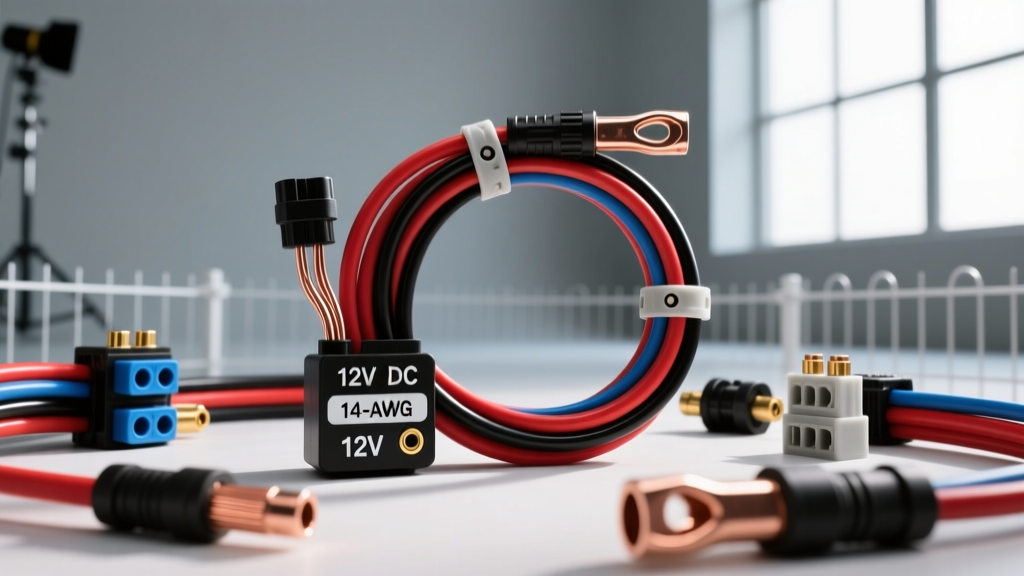
Introduction: The Bulk Wire Temptation in Auto Wiring
When fabricating custom automotive harnesses, wiring trailer controllers, or running auxiliary 12V lighting, the cost of premium SAE-rated automotive wire can quickly add up. Consequently, many DIYers and budget-conscious fabricators turn to bulk spools of 14 gauge wire for dog fence. Sold in 500 to 1,000-foot rolls at a fraction of the cost of automotive-grade cable, this wire is engineered for underground burial and low-voltage radio frequency (RF) signals, not for the harsh, high-vibration, thermally extreme environment of a vehicle chassis.
As an automotive electrical engineer, I frequently see catastrophic harness failures resulting from the misuse of subterranean landscape wire in 12V DC applications. This advanced technical deep dive will dissect the metallurgical, thermal, and electrical properties of 14 AWG dog fence wire, compare it against SAE J1128 automotive standards, and define exactly where this wire will fail in your vehicle—and the rare instances where it might survive.
Metallurgical Breakdown: Solid Core vs. Stranded SAE J1128
The most fundamental difference between automotive wire and invisible fence wire is the conductor architecture. SAE J1128 mandates stranded pure copper (typically 41 strands of 30 AWG wire bundled to form a 14 AWG conductor). This stranding provides the flex fatigue resistance required to survive engine harmonics and chassis torsion.
Conversely, 14 gauge wire for dog fence is almost exclusively solid core. While a solid 14 AWG copper core has a slightly smaller physical diameter than a stranded equivalent (yielding marginally lower DC resistance per foot), it lacks ductility. Under constant automotive vibration, solid core wire undergoes work hardening. The crystalline structure of the copper becomes brittle, eventually snapping inside the insulation, creating an invisible open circuit or a high-resistance arcing point.
The CCA and CCS Trap
Not all dog fence wire is pure copper. To reduce manufacturing costs, many bulk spools utilize Copper-Clad Aluminum (CCA) or Copper-Clad Steel (CCS). Because invisible dog fences operate on AM radio frequencies (typically 7 to 10 kHz), the skin effect allows the RF signal to travel efficiently along the thin outer copper layer, making CCA perfectly viable for its intended use.
However, in a 12V DC automotive circuit, current flows through the entire cross-section of the conductor. Aluminum has roughly 61% of the conductivity of copper. If you unknowingly route 14 AWG CCA dog fence wire to a trailer brake controller drawing 12A, the effective resistance will mimic that of 17 or 18 AWG pure copper wire, leading to severe voltage drop and potentially melted insulation. Always perform a scrape test: if scratching the wire reveals a silver-white core instead of bright copper, it is CCA and must be derated by at least 40% for DC ampacity.
DC Resistance and Voltage Drop Calculations
Understanding the exact resistance per foot is critical when calculating voltage drop for automotive accessories. According to Engineering Toolbox AWG Conductor Properties, solid pure copper 14 AWG exhibits a resistance of approximately 2.525 ohms per 1,000 feet at 20°C. Stranded SAE automotive wire is slightly higher (around 2.58 ohms) due to the spiral lay length of the strands.
| Wire Type | Core Architecture | Material | Ohms / 1000ft @ 20°C | Max DC Ampacity (Auto) | Insulation Temp Rating |
|---|---|---|---|---|---|
| SAE J1128 Primary | Stranded (41/30) | Pure Copper | 2.58 Ω | 15A - 20A | 105°C - 125°C (XLPE) |
| Premium Dog Fence | Solid Core | Pure Copper | 2.52 Ω | 10A (Derated for Vib.) | 75°C (HDPE/PVC) |
| Budget Dog Fence | Solid Core | Copper-Clad Aluminum | 4.15 Ω | 6A - 8A | 60°C - 75°C (PE) |
| Heavy Duty Fence | Solid Core | Copper-Clad Steel | ~12.0 Ω | 3A - 5A | 75°C (HDPE) |
Voltage Drop Scenario: Imagine routing 14 gauge wire for dog fence (pure copper) to a 12V LED light bar drawing 8A, with a total round-trip cable length of 40 feet.
Formula: Voltage Drop = (2 × Length × Current × Resistance) / 1000
Using pure copper (2.52 Ω): VD = (2 × 20 × 8 × 2.52) / 1000 = 0.80 Volts. (Acceptable).
Using CCA (4.15 Ω): VD = (2 × 20 × 8 × 4.15) / 1000 = 1.32 Volts. (Borderline, may cause PWM flickering in CAN-bus monitored lighting circuits).
Insulation Chemistry: HDPE vs. Automotive XLPE
The insulation jacket is where 14 AWG dog fence wire fails most spectacularly in automotive environments. Subterranean fence wire is typically coated in High-Density Polyethylene (HDPE) or Linear Low-Density Polyethylene (LLDPE). These polymers are exceptional for resisting soil acidity, moisture, and UV radiation. They are engineered to survive being buried under a lawn for 20 years.
However, HDPE has a relatively low melting point (approx. 130°C) and zero resistance to petroleum-based chemicals. If HDPE-insulated wire is routed through an engine bay and comes into contact with engine oil, power steering fluid, or brake cleaner, the polymer will rapidly degrade, swell, and slough off, leaving a bare 14V short-circuit hazard against the chassis.
Automotive wire utilizes Cross-Linked Polyethylene (XLPE) or specialized PVC blends. XLPE undergoes a chemical curing process that creates a 3D molecular mesh, granting it resistance to battery acid, oil, and continuous operating temperatures up to 125°C (and short-term spikes to 150°C). Never route dog fence wire near exhaust manifolds, engine blocks, or through firewall grommets where sharp metal edges can easily slice the softer HDPE jacket.
Termination Physics: Why Crimping Solid Core Fails
Standard automotive terminals—such as Delphi Packard Metri-Pack or TE Connectivity open-barrel crimps—are engineered specifically for stranded wire. The crimp wings are designed to fold inward, compressing the individual copper strands so they cold-weld and interlock, creating a gas-tight seal that resists oxidation and vibration.
When you attempt to crimp an automotive terminal onto solid 14 gauge dog fence wire, the terminal wings cannot deform the solid copper cylinder. Instead, the sharp edges of the crimp barrel bite into the wire, creating severe stress concentrators. As the wire heats up under load and cools down (thermal cycling), the metal expands and contracts. Combined with vehicle vibration, the solid core will inevitably shear off precisely at the crimp line.
Expert Termination Advice: If you must terminate solid core 14 AWG wire in a vehicle, abandon mechanical crimps. Use adhesive-lined heat shrink solder sleeves. The solder provides a continuous metallurgical bond that distributes mechanical stress, while the heat-activated polyamide adhesive seals out moisture and prevents the solid wire from pivoting and snapping inside the connector.
Real-World Automotive Applications: Where It Works and Fails
Acceptable Low-Current, Low-Vibration Uses
- Relay Trigger Circuits (Pins 85 & 86): Triggering a standard ISO relay draws less than 150mA. Voltage drop is irrelevant here, and if the wire is routed through the cabin (away from heat and oil), solid core 14 AWG is perfectly adequate and overkill for the current.
- Stationary Amplifier Remote Turn-On: Running the 12V+ remote signal to a trunk-mounted amplifier draws negligible current. As long as the wire is secured tightly with zip-ties every 6 inches to prevent flexing, it will survive.
Unacceptable High-Current and High-Vibration Uses
- Trailer Brake Controllers: Electric trailer brakes can draw 10A to 15A per axle. The voltage drop of CCA dog fence wire will result in weak braking performance, and the solid core will snap at the 7-way RV connector due to road shock.
- Winch Solenoid Control Wiring: Routing solid core wire near the winch motor or front bumper exposes it to extreme shock loads and high ambient heat, guaranteeing insulation failure and work-hardening breaks.
- Oxygen Sensor Heaters: O2 sensor heaters draw 2A to 4A but operate in extreme heat zones. The HDPE insulation on dog fence wire will melt against the exhaust heat shields.
Troubleshooting Invisible Breaks in Solid Core Wire
Because solid core wire breaks internally while the HDPE insulation remains perfectly intact, visual inspection is useless. If you have used 14 gauge wire for dog fence in a custom harness and are experiencing intermittent electrical gremlins, you must use a Time Domain Reflectometer (TDR) or a specialized automotive tone generator with a continuity probe. By sending a high-frequency pulse down the wire, a TDR will bounce the signal back from the exact point of the internal shear, allowing you to pinpoint the break within inches, even if the wire is buried deep inside a split-loom harness or behind interior trim panels.
Conclusion and Expert Verdict
While buying a 1,000-foot spool of 14 gauge wire for dog fence seems like a masterstroke of frugality, the hidden costs of voltage drop, chemical degradation, and vibration-induced open circuits make it a liability for critical automotive DC systems. For cabin routing of low-current relay triggers, pure copper solid core is acceptable if properly soldered. However, for any circuit exceeding 5A, or any wiring routed through the engine bay or chassis flex zones, the investment in stranded, XLPE-insulated SAE J1128 automotive wire is non-negotiable for long-term reliability and fire safety.