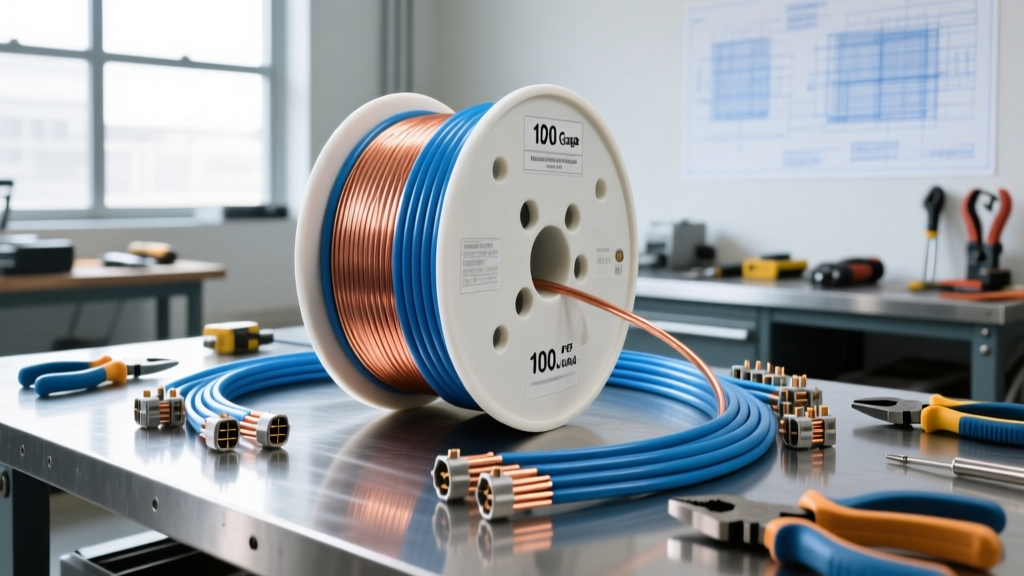
The Beginner's Guide to Using a 100 ft 12 Gauge Wire Spool
Purchasing your first 100 ft 12 gauge wire spool is a rite of passage for any automotive DIYer or aspiring fabricator. 12 AWG (American Wire Gauge) is the undisputed workhorse of the automotive electrical system, bridging the gap between low-draw sensor circuits and heavy-duty starter cables. Whether you are wiring a custom chassis, performing an LS engine swap, or adding auxiliary lighting to a Jeep Wrangler, a 100-foot spool provides ample length for multiple projects.
However, simply buying the right gauge is only half the battle. Understanding how length affects amperity, choosing the correct insulation type, and calculating voltage drop over long runs are critical skills. This guide breaks down the beginner-friendly fundamentals of deploying 12 AWG wire in real-world automotive applications, ensuring your electrical system is safe, reliable, and efficient.
12 AWG Wire Specifications & Ampacity Chart
Before cutting into your new spool, you must understand the physical and electrical properties of 12 gauge automotive wire. Unlike household wiring, automotive wire is highly stranded to withstand constant vibration and flexing. According to the SAE J1128 standard, standard 12 AWG automotive cable consists of multiple bare copper strands encased in specialized insulation.
| Specification | 12 AWG Automotive Wire (TXL/GXL) |
|---|---|
| Cross-Sectional Area | 3.31 mm² (approx. 6,530 Circular Mils) |
| Strand Count | 37 to 65 strands (typically 30 AWG bare copper) |
| Nominal Outside Diameter | 3.09 mm (0.121 inches) |
| Resistance @ 20°C | 1.588 Ohms per 1,000 ft (0.159 Ohms per 100 ft) |
| Max Ampacity (Chassis/Cabin) | 20A - 25A (Short runs under 15 ft) |
| Max Ampacity (Engine Bay) | 15A - 18A (Derated for high ambient heat) |
Note: Ampacity ratings are highly dependent on circuit length and ambient temperature. Always consult the Pacer Group Technical Resources or manufacturer charts for specific derating curves.
The Voltage Drop Factor: Why Length Matters
The most common mistake beginners make when using a 100 ft 12 gauge wire spool is ignoring voltage drop. A 12V automotive system is actually a 13.8V to 14.4V system when the alternator is charging. Electrical components like fuel pumps, cooling fans, and amplifiers are designed to operate optimally within this range.
Voltage drop occurs because wire has inherent resistance. The longer the wire, the higher the resistance, and the more voltage is lost as heat before it reaches your component. When calculating voltage drop, you must account for the Total Circuit Length, which includes both the positive wire from the battery and the negative ground wire returning to the chassis.
Real-World Math: The 100 ft Circuit
Let's say you are wiring a rear-mounted fuel pump in a classic muscle car. You run 50 feet of 12 AWG wire from the front-mounted battery to the trunk, and use another 50 feet of wire to ground the pump to the chassis near the battery. Your total circuit length is 100 feet.
- Total Resistance: 0.159 Ohms (based on 100 ft of 12 AWG copper)
- Fuel Pump Draw: 12 Amps (typical for a Walbro 255lph pump)
- Voltage Drop Formula: V = I × R (12A × 0.159Ω = 1.90 Volts)
If your alternator is pushing 14.0V, subtracting the 1.90V drop leaves only 12.1V at the fuel pump. While this will work, it is nearing the upper limit of acceptable drop (typically 3% or 0.42V for sensitive electronics). If your pump draws 18A under high load, the drop increases to 2.86V, starving the pump of voltage and causing premature failure. For a true 100-foot total circuit, 12 AWG should be limited to loads drawing 10 Amps or less to maintain optimal efficiency.
Common Automotive Applications for 12 AWG
Knowing where to deploy your 100 ft spool is just as important as knowing the math. Here are the most common, beginner-friendly applications for 12 gauge wire:
- Fuel Pump Power & Ground: Ideal for in-tank EFI pumps drawing 10-15A. Use a 30A Bosch-style relay triggered by a 16 AWG or 18 AWG wire from your ECU or ignition switch.
- Electric Cooling Fans: Perfect for routing power from a high-amperage relay to single or dual Spal cooling fans. Ensure you use a 30A or 40A circuit breaker near the battery feed.
- Amplifier Power (Short Runs): Suitable for compact subwoofer amplifiers (under 300W RMS) located under the passenger seat. For trunk-mounted, high-wattage amps, step up to 8 AWG or 4 AWG.
- Winch Solenoid Controls: Excellent for running the trigger wires from the cab to the front bumper winch solenoid box, as the solenoid coils draw very low amperage.
Choosing the Right Insulation: TXL vs. PVC
Not all 12 gauge wire is created equal. Beginners often mistakenly purchase THHN or standard PVC (Polyvinyl Chloride) wire from a local hardware store because it is cheaper. Never use PVC wire in an automotive application. PVC insulation becomes brittle in freezing temperatures, cracks under engine bay heat, and melts instantly if it brushes against an exhaust header.
Instead, ensure your 100 ft spool is rated for automotive use. Look for these industry-standard insulation types:
- TXL (Thin-wall Cross-linked Polyethylene): The gold standard for modern automotive wiring. It is lightweight, highly resistant to heat (up to 125°C), and flexible.
- GXL (General Cross-linked): Slightly thicker insulation than TXL, offering superior abrasion resistance for routing through sheet metal bulkheads.
- SXL (Special Cross-linked): The thickest insulation, used primarily in heavy-duty trucking and high-wear environments.
Connectors and Terminals for 12 AWG
A wire is only as good as its termination. Improperly crimped connectors are the leading cause of electrical fires and parasitic draws. When working with 12 AWG wire, you will primarily use three types of connectors:
1. Metri-Pack 280 Series
Commonly used by GM, Ford, and Chrysler for fuel pumps, oxygen sensors, and transmission solenoids. The '280' refers to the 2.8mm width of the male pin. For a GM fuel pump pigtail, Pin A is typically the ground (Black wire) and Pin B is the 12V+ feed (Grey or Purple wire). You must use a specific Metri-Pack crimper to fold the wire tabs and insulation tabs correctly.
2. Delphi Weather-Pack
These are the classic, weather-sealed connectors with cylindrical pins and silicone rubber seals. They are bulky but incredibly reliable for exterior applications like off-road light bars, trailer harnesses, and engine bay sensors. 12 AWG wire fits perfectly into the larger Weather-Pack terminals (rated for up to 20A).
3. Heat-Shrink Ring and Spade Terminals
For terminating 12 AWG wire to a battery post, fuse block stud, or chassis ground bolt, use adhesive-lined, heat-shrink ring terminals (typically sized for #8 or #10 studs). The adhesive lining melts during the heating process, sealing the copper strands against moisture and preventing green corrosion.
Troubleshooting Common Beginner Mistakes
As you work through your 100 ft spool, avoid these frequent pitfalls that compromise vehicle safety:
- Skipping the Relay: Never run 12 AWG wire directly from a dashboard switch to a high-draw component like a fuel pump or cooling fan. Dashboard switches are rated for 3-5 Amps. Use the 12 AWG wire to carry the heavy load from the battery through a relay, and use 16 AWG wire for the low-amp switch trigger.
- Fusing at the Load Instead of the Source: The inline fuse must be installed within 6 to 12 inches of the battery or power distribution block. If a fuse is placed near the fuel pump in the trunk, the entire 50-foot run of 12 AWG wire through the cabin remains unfused and can melt in the event of a short to ground.
- Using Chassis Grounds for High-Draw Components: While 12 AWG can handle the current, relying on a rusty bolt in the trunk for a fuel pump ground will cause voltage drop. For critical EFI components, run a dedicated 12 AWG ground wire back to the engine block or battery negative terminal.
- Soldering Instead of Crimping: In high-vibration automotive environments, soldered joints create a rigid stress point that will eventually snap the copper strands. Always use high-quality mechanical crimps with proper ratcheting tools.
Mastering the use of a 100 ft 12 gauge wire spool elevates your automotive builds from amateur to professional. By respecting voltage drop calculations, choosing TXL insulation, and executing flawless crimps, you ensure your vehicle's electrical system will perform reliably for years to come.