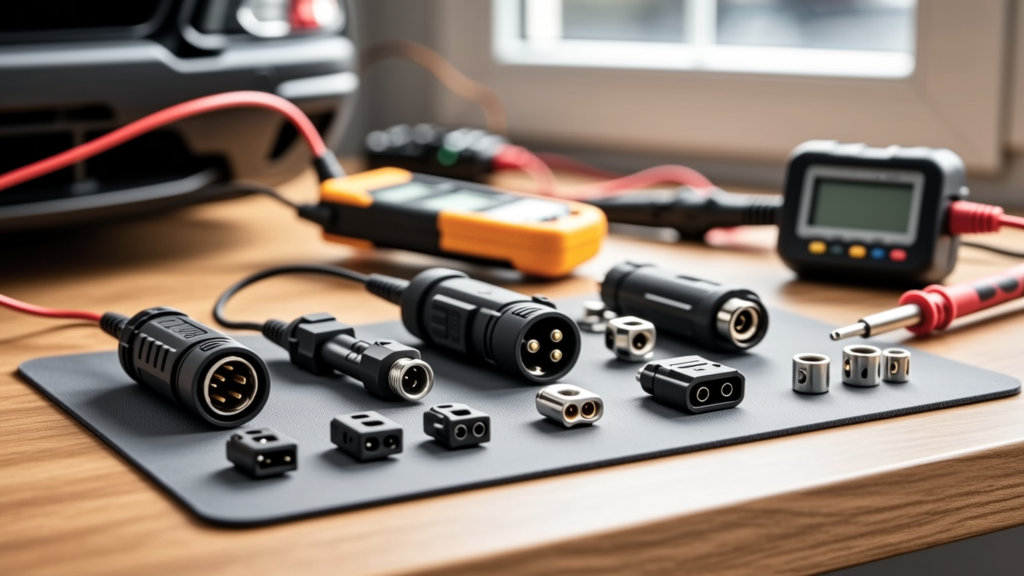
As a cat care expert and feline behaviorist, I often see battery-powered devices fail because a repair connector is loose, undersized, or poorly insulated. The best repair connectors for battery projects are those that match voltage, current, wire size, environment, and mechanical stress. For small electronics, JST PH 2.0 and Molex Picoblade connectors work well. For larger battery packs, Amass XT30, XT60, and Anderson Powerpole connectors provide secure, low-resistance connections. Cat households need strain relief, covered terminals, and chew-resistant routing so cats are safe and devices stay powered.
How To Evaluate The Best Repair Connectors For Battery Use
A battery repair connector is not just a plug. It is a safety component. It must carry current without overheating, resist accidental pulls, maintain low contact resistance, and keep exposed metal away from people, cats, and conductive debris. When I recommend a connector, I start with the circuit: a 3.7 volt LiPo module for an automatic cat feeder is different from a 12 volt AGM battery bank for a garage backup light.
Current rating matters more than people expect. A connector rated for 30 A may be safe for continuous use, but a 5 A connector used on a 12 volt lead-acid battery can become hot enough to soften insulation. Wire gauge matters too. Common repair wires include 22 AWG for signal circuits, 18 AWG for low-power devices, 16 AWG for moderate current, and 12 AWG for higher-current battery work. Silicone wire with 18 AWG and a 155 degree Celsius rating is often better for tight spaces than standard PVC wire.
Voltage, polarity, and insulation are the next checks. Many hobby battery packs run below 30 volts, but some repaired tool batteries, UPS modules, and solar storage systems can reach 36 volts, 48 volts, or higher. For those, choose connectors with proper spacing, locking features, and clear color coding. Red and black silicone heat shrink, 2:1 shrink ratio, helps identify polarity and prevents short circuits.
Quick Comparison Of Popular Battery Repair Connectors
| Connector | Best Use | Typical Rating | Why It Works | Watch Out |
|---|---|---|---|---|
| JST PH 2.0 | Small electronics, cat feeder boards, sensors | 2 to 3 A | Compact, keyed, low profile | Not for high current |
| Molex Picoblade | Low-power DC circuits | 2 to 5 A | Reliable crimp, good for tight PCBs | Need correct crimp tool |
| Amass XT30 | RC batteries, 3S packs, 12 V projects | 30 A continuous | Polarized, easy to disconnect | Plastic can crack if forced |
| Amass XT60 | 6S LiPo, power banks, larger packs | 60 A continuous | Strong spring contacts, good heat tolerance | Bulkier than XT30 |
| Anderson Powerpole | 12 V and 24 V battery systems | 15 to 45 A | Stackable, color-coded, field friendly | Requires correct crimp terminal |
| Anderson SB 120 | High-current battery banks | 120 A | Secure, low resistance, industrial feel | Overkill for small devices |
| Ring terminal | Screw post battery connections | Varies by gauge | Secure, easy to inspect | Can loosen over time |
This comparison is a starting point, not a rule. A 30 A connector is not automatically better than a 5 A connector if the wire is 22 AWG and the device only draws 0.5 A. The best repair connector is the one that fits the electrical load, the cable size, the enclosure, and the risk of accidental disconnection.
Best Small Electronics Battery Repair Connectors
Many cat gadgets use low-current battery systems: automatic feeders, GPS trackers, laser toys, pet water fountain pumps, and heated pads. These often use small connectors with pitches of 2.0 mm, 2.5 mm, or 2.54 mm. If a device has a small battery plug, JST or Molex style connectors are usually the safest replacement path.
JST PH 2.0, JST XH 2.54, And Similar Connectors
JST PH 2.0 connectors are compact, keyed, and common on 3.7 V lithium polymer modules. They usually handle about 2 to 3 A, making them suitable for feeder control boards, sensor circuits, and small LEDs. JST XH 2.54 connectors are slightly larger and often used for fan headers or small battery management boards. The key is using the correct crimp terminal and insertion tool, because a hand-crimped pin that is too loose will heat up and fail.
Molex Picoblade is another strong option for low-power DC circuits. It can handle 2 to 5 A depending on the series, and it is popular for tight enclosures. Dupont 2.54 connectors are handy for prototyping, but they are not my first choice for permanent battery repairs because they can pull out easily and are not strain-relieved. If you use Dupont for a temporary test, move to a locked connector for the final repair.
Best High-Current Battery Repair Connectors
When battery packs power stronger loads, such as robot vacuum motors, electric fence chargers, portable power stations, or 12 V car accessories, small connectors can become weak points. High-current repairs need connectors with gold-plated or tin-plated spring contacts, good dielectric strength, and reliable locking.
Amass XT30, XT60, And Anderson Powerpole
Amass XT30 connectors are a favorite for 3S and 4S lithium polymer battery packs and 12 V projects. They are rated around 30 A continuous, and their polarized shape reduces reversed insertion. XT60 connectors handle about 60 A continuous and are better for larger packs. They use silicone wire frequently because the connector can get warm under high load, and silicone insulation tolerates higher temperatures than standard PVC.
Anderson Powerpole connectors are excellent for 12 V and 24 V battery systems. The 13 to 45 A versions are stackable and color-coded, which makes maintenance easier in a household or workshop. For higher current, Anderson SB 120 connectors can handle 120 A in many configurations. They are robust, but they are heavier and take more space, so they are best for battery banks, inverters, and larger power tools rather than a small cat tracker.
Screw Terminals, Ring Terminals, Spade Connectors, And Bullet Connectors
Some battery repairs do not need a quick-disconnect connector. If the device uses a terminal block, screw post, or chassis ground, the best repair connector may be a crimp terminal paired with a screw fastener. This approach is common with lead-acid batteries, AGM batteries, and older electronic enclosures.
Choosing The Right Terminal Type
Ring terminals are ideal for screw posts because they wrap around the fastener and stay connected even if the wire is tugged. For 12 V car batteries, a 5/16 inch or 10 mm ring terminal paired with 10 AWG or 12 AWG wire is a practical starting point. Spade connectors are useful for removable connections, but they can lift off if not secured. Bullet connectors are compact and handy for low to moderate current, but they are not as vibration resistant as ring terminals.
For screw terminals on battery packs, use a ferrule when the wire is stranded. A ferrule keeps the strands from splaying and improves contact area. TE Connectivity, Molex, and Anderson Power Products are reputable brands to look for. If you repair a Bosch tool battery or an Energizer power pack, check whether the original terminal is a screw clamp, a spring cage, or a molded connector before assuming a generic part will fit.
Installation Steps For Safe Battery Connector Repair
Good connectors fail if installation is rushed. I teach cat owners to treat battery repairs like grooming tools: clean, organized, and never left loose where a pet can grab them. Use insulated screwdrivers, a multimeter, and heat shrink before applying power.
- Disconnect the battery and verify zero voltage with a Fluke or Klein multimeter.
- Identify the original wire gauge and connector rating before ordering replacements.
- Strip insulation cleanly with a wire stripper; avoid nicking copper strands.
- Crimp terminals with the correct tool, then pull-test each connection.
- Slide heat shrink over the joint before soldering or crimping, then shrink it.
- Route cables away from moving parts, heater elements, and cat access points.
- Add strain relief with a cable clamp, zip tie, or molded boot.
- Label polarity with red and black markers, then test under load.
For high-current battery connectors, torque matters. A loose screw terminal can create micro-arcing and heat. A snug connector with the correct crimp can run much cooler. If you are not comfortable cutting a battery pack, use an external connector adapter rather than opening a sealed pack. Duracell and Energizer consumer battery packs often have protective casings that should not be damaged.
- Use 18 AWG silicone wire for many small battery repairs and 12 AWG for higher-current circuits.
- Use 2:1 heat shrink or marine-grade adhesive-lined heat shrink for moisture resistance.
- Use locking connectors or tape over screw terminals when vibration is present.
- Test with a known load before returning the device to a cat area.
Cat-Safe Battery Repair Practices
Cats are curious, and battery repairs can create hazards. A cat may chew an exposed wire, step on a small connector, knock a device off a table, or hide beside a warm battery. As a feline behaviorist, I recommend designing repairs so the cat cannot interact with the power source.
Make The Repair Invisible To Cat Behavior
Keep cables under furniture or in raceways. Use strain relief so a tug does not pull current into a loose joint. Cover metal terminals with heat shrink or an insulated boot. Avoid small loose parts that a kitten can swallow. If a device has a battery compartment, secure it with screws rather than a snap cover that a cat can paw open. For automatic feeders, place the power adapter and connector behind a stable object and away from water bowls.
- Route cords along baseboards and use cord covers rated for foot traffic.
- Use connectors with locking tabs so accidental pulls do not create sparks.
- Keep battery packs off the floor where litter and water can reach terminals.
- Check warm connectors during the first ten minutes of operation.
- Choose non-toxic cable jackets and avoid loose zip tie tails.
A secure battery repair also supports cat behavior. Cats prefer predictable routines. If a feeder, litter sensor, or water pump loses power because a connector loosened, the cat may show stress, vocalization, or refusal to use the device. A well-installed connector protects both the gadget and the animal.
Common Mistakes And Practical Fixes
The most common mistake is choosing a connector only by plug shape. Two connectors can look similar but have different ratings. Another mistake is using solder without heat shrink, leaving bare metal exposed. A third is replacing a small 2 A connector with a larger one that does not fit the enclosure or strain relief.
- Undersized wire: replace with 16 AWG or 14 AWG if the connector is rated for that load.
- Loose crimp: recrimp with the correct terminal tool and pull-test.
- Reverse polarity: add color coding and a keyed connector before reinstalling.
- Overheating connector: check load, wire gauge, and contact resistance with a multimeter.
- Chewed insulation: move the cable and add a protective sleeve or raceway.
When I compare repair options, I ask three questions: Is it electrically adequate? Is it mechanically secure? Is it safe for the household? The best repair connectors for battery use are not always the biggest or most expensive. A JST connector is correct for a tiny tracker. An XT60 is correct for a large LiPo pack. An Anderson Powerpole is correct for a 12 V battery system. A ring terminal is correct for a screw post. Match the connector to the circuit, install it with proper crimping and insulation, and keep the whole assembly out of your cat's way.