The True Cost of Dealership Electrical Diagnostics
Modern vehicles are essentially rolling networks, utilizing multiplexed CAN bus systems, LIN bus circuits, and high-current 48V mild-hybrid architectures. When a sensor fails or a wiring harness chafes, the dealership quote for repair car electrical system services can easily exceed $150 per hour in labor, often resulting in full harness replacements rather than targeted repairs. For DIY enthusiasts and independent mechanics, understanding how to select professional-grade connectors and terminal crimping tools is the key to bypassing these exorbitant service fees while maintaining OEM-level reliability.
This product comparison and selection guide breaks down the exact connector families, wire specifications, and crimping methodologies used by top-tier automotive electrical specialists. Whether you are repairing a frayed oxygen sensor pigtail on a 2015 Ford F-150 or rebuilding a headlight connector on a 2018 Chevy Silverado, selecting the right terminal and tooling is non-negotiable.
Product Comparison: Pro-Grade Terminals vs. Retail Auto Parts Kits
Most retail auto parts stores sell generic, vinyl-insulated butt splices and ring terminals. While acceptable for static, low-vibration marine or household applications, these are catastrophic failures waiting to happen in an automotive engine bay. Professional repair car electrical system services rely exclusively on open-barrel, unsealed or sealed stamped terminals that mate with specific hard-shell connector bodies.
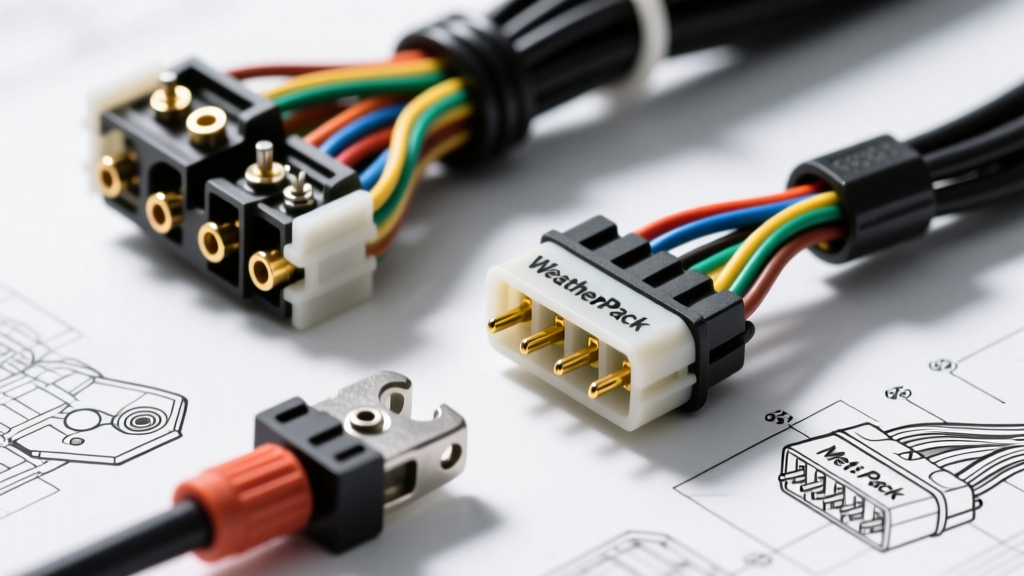
1. Aptiv (Delphi) Weather-Pack Series
The Weather-Pack system is the legacy standard for sealed automotive connections, commonly found in under-hood lighting, alternator outputs, and older sensor circuits. It features a silicone ribbed seal that slides over the wire insulation before crimping.
- Current Rating: Up to 20 Amps.
- Wire Range: 14 to 18 AWG (Primary focus on 16 AWG).
- Seal Type: Individual silicone rib seals (requires specific seal insertion tools to avoid tearing).
- Best Application: Exterior lighting, horn relays, and high-current 12V accessory circuits.
2. Aptiv Metri-Pack 150 and 280 Series
Metri-Pack connectors dominate modern engine management and transmission solenoid circuits. Unlike Weather-Pack, Metri-Pack utilizes a 'pull-to-seat' or 'push-to-seat' design where the terminal itself locks into the hard plastic housing using a primary and secondary lock (TPA - Terminal Position Assurance).
- Current Rating: 150 Series (up to 14A), 280 Series (up to 30A).
- Wire Range: 20 to 10 AWG depending on the series.
- Seal Type: Individual cavity plugs or multi-wire mat seals.
- Best Application: Fuel injectors, MAP/MAF sensors, and ABS wheel speed sensors.
3. TE Connectivity Deutsch DT Series
When professional repair car electrical system services tackle heavy-duty trucks, off-road equipment, or high-vibration engine bays, they reach for Deutsch DT connectors. These feature a secondary wedge lock that prevents terminal back-out under extreme mechanical shock.
- Current Rating: 13 Amps continuous per contact.
- Wire Range: 14 to 16 AWG.
- Seal Type: Integrated silicone grommet and rear environmental seal.
- Best Application: Diesel glow plug controllers, heavy-duty transmission harnesses, and winch solenoids.
Specification Chart: Matching Connectors to Automotive Circuits
| Connector Family | Typical AWG | Max Current | Crimping Tool Required | Common Vehicle Application |
|---|---|---|---|---|
| Weather-Pack | 14-18 AWG | 20A | Delphi Weather-Pack Crimper (e.g., Tool 12094429) | GM Headlight Pigtails, Ford Alternator Exciter |
| Metri-Pack 150 | 18-20 AWG | 14A | Open-Barrel F-Crimper (Iwiss SN-28B or TE CERTI-CRIMP) | O2 Sensor Heaters, TPS, Crankshaft Position |
| Metri-Pack 280 | 10-14 AWG | 30A | Heavy Duty Open-Barrel Crimper | Ignition Coils, EVAP Purge Valves, Blower Motors |
| Deutsch DT | 14-16 AWG | 13A | Deutsch DT Specific Ratcheting Crimper | Diesel Injector Harnesses, PTO Controllers |
| Molex MX150 | 18-22 AWG | 14A | Precision F-Crimper with locator | Modern CAN Bus Nodes, Airbag Clocksprings |
Wire Insulation Standards: SAE J1128 Compliance
When performing harness repairs, the wire you select is just as critical as the terminal. Professional shops do not use standard PVC-insulated THHN wire from hardware stores. According to SAE J1128 standards, automotive primary cable must withstand severe temperature cycling, fluid exposure (brake fluid, oil, coolant), and mechanical abrasion.
You must select Cross-Linked Polyethylene (XLPE) wire types:
- GXL (General Cross-Linked): Thin-wall insulation, rated to 125°C. The standard for most modern engine bay wiring repairs.
- TXL (Extra-Thin Cross-Linked): Ultra-thin wall, rated to 125°C. Used in tight spaces like dashboard clusters and steering column stalks to reduce harness bulk and weight.
- SXL (Special Cross-Linked): Standard wall thickness, rated to 125°C. Used for high-abrasion areas where the wire may rub against the firewall or chassis.
Pro-Tip: When repairing a twisted-pair CAN bus circuit (e.g., GM GMLAN using Purple and Purple/White wires), you must maintain the exact twist rate (typically 1 twist per inch) after stripping the jacket. Untwisting the wires changes the characteristic impedance, leading to communication DTCs like U0100 (Lost Communication with ECM).
The Crimp vs. Solder Debate in Automotive Environments
A common mistake DIYers make when avoiding repair car electrical system services is soldering their connections. While soldering creates a low-resistance electrical bond, it is highly discouraged in modern automotive wiring for several reasons:
- Wicking and Stiffness: Molten solder wicks under the wire insulation via capillary action. This creates a rigid, brittle section of wire right at the exit of the connector. Engine vibration will cause a stress fracture exactly where the flexible wire meets the stiff, soldered section.
- Galvanic Corrosion: The flux and dissimilar metals in solder can accelerate galvanic corrosion when exposed to road salt and humidity, especially if the heat shrink seal fails.
- SAE and OEM Standards: Virtually all OEM wiring repair manuals (including Ford WSM and GM Service Information) explicitly forbid soldering in harness repair. They mandate the use of ratcheting, open-barrel crimp tools.
Mastering the Open-Barrel 'F' Crimp
Professional terminals use an open-barrel design that forms an 'F' shape when crimped. A proper crimp consists of two distinct zones:
- Conductor Crimp: The metal tabs fold tightly over the bare copper strands. You must see a slight 'brush' (about 1mm) of copper strands protruding past the front of the conductor crimp to ensure full wire insertion.
- Insulation Crimp: The larger rear tabs fold over the wire jacket, providing strain relief. They must grip the insulation tightly without cutting through to the copper strands.
For sealed connectors, a dual-wall, adhesive-lined heat shrink (3:1 shrink ratio) is required over the backshell to prevent moisture ingress. The internal hot-melt adhesive melts and seals the wire jacket, matching the IP67/IP69K ratings of the connector body.
When to Hire Professional Repair Car Electrical System Services
While replacing a melted headlight pigtail or splicing a broken ABS sensor wire is well within the DIY realm using the correct Metri-Pack or Weather-Pack kits, certain scenarios demand professional intervention. You should seek out certified repair car electrical system services when dealing with:
- Parasitic Draws on Multiplexed Networks: If a module fails to 'sleep' on the CAN bus, diagnosing the specific node requires a pico-automotive oscilloscope to read the differential voltage waveforms (CAN High typically 2.5V-3.5V, CAN Low 1.5V-2.5V).
- SRS (Airbag) Circuit Repairs: Airbag harnesses use specialized shorting-bar connectors and specific gold-plated terminals. Improper crimping or probing can deploy the SRS system or cause a failure during a collision. Most OEMs mandate total harness replacement for SRS circuits.
- High-Voltage EV/Hybrid Systems: Orange-jacketed cables in EVs carry 400V to 800V DC. These require specialized shielded connectors, specific torque specs on busbars, and insulated tooling. Never attempt DIY repairs on high-voltage traction circuits.
Final Verdict: Investing in Your Own Capabilities
If you plan to keep your vehicle long-term, investing $150-$300 in a high-quality ratcheting F-crimper set, a Weather-Pack/Metri-Pack terminal assortment kit, and a spool of 16 AWG GXL wire will pay for itself on the very first repair. By adhering to OEM crimp profiles and SAE wire standards, your DIY repairs will outlast the vehicle, saving you from relying on overpriced dealership repair car electrical system services. For further reading on terminal extraction and connector rebuilding, consult the Aptiv Connection Systems catalog or reference TE Connectivity application specifications for precise crimp height measurements.