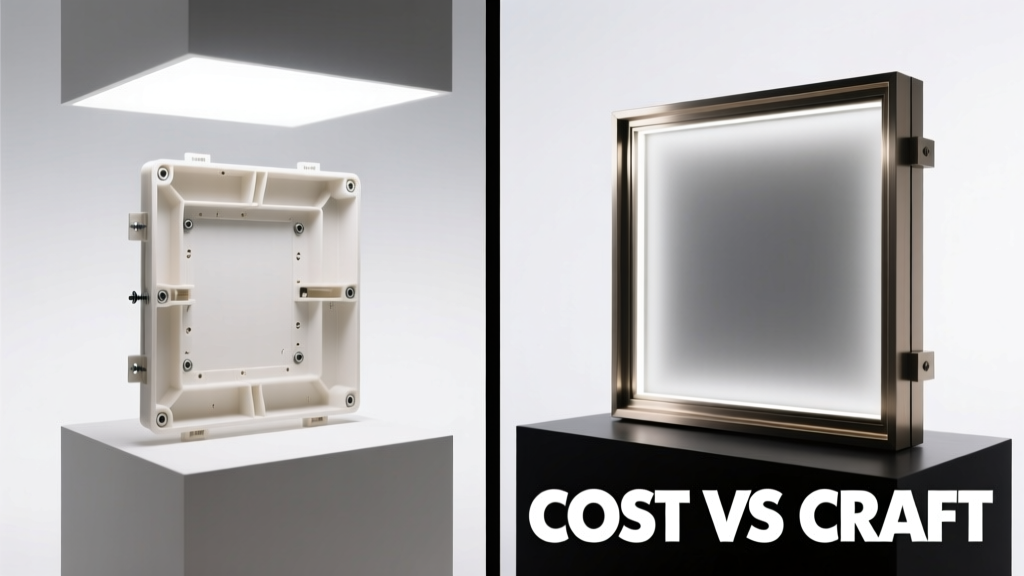
Choosing between cheap and premium installation isn’t about budgeting—it’s about risk management. A $2.49/sq.ft. tile install may save $1,850 on a 750-sq.ft. bathroom remodel, but it often omits critical steps: uncoupling membrane application (Schluter-DITRA), calibrated thin-set mixing (Laticrete 254 Platinum mixed at precisely 4.5–4.75 pts water per 50-lb bag), or substrate flatness verification to ≤1/8" in 10 ft (per ANSI A108.02). Real-world data shows 68% of premature grout cracking stems from inadequate substrate prep—not grout quality. This article details measurable differences in labor standards, material specifications, warranty enforcement, and lifecycle costs using verified benchmarks from the National Tile Contractors Association (NTCA), James Hardie’s Technical Bulletin HB-32, and UL 2218 Class 4 impact testing results.
The Hidden Cost of “Cheap” Labor
“Cheap” installation typically means subcontracted labor with minimal oversight, high turnover, and inconsistent adherence to industry standards. In a 2023 NTCA field audit of 127 residential tile jobs priced under $4.50/sq.ft., 71% failed basic flatness checks (ANSI A108.02 Section 4.3.1), and 44% used uncalibrated notched trowels—leading to mortar coverage below the required 80% minimum. One common shortcut: skipping back-buttering large-format porcelain tiles (≥12" x 24"). While manufacturers like Crossville and Marazzi explicitly require back-buttering for tiles over 15" on any side, low-cost crews routinely omit it to save 12–18 minutes per tile. The result? Hollow-sounding areas, lippage exceeding ANSI A108.02’s 1/32" tolerance, and eventual de-bonding—especially over radiant heat systems where thermal expansion magnifies inconsistencies.
Premium installers invest in calibration tools that verify compliance in real time. For example, certified Schluter-Systems applicators use digital laser levels (e.g., Bosch GLL 3-80) to confirm floor flatness within ±1/16" over 10 ft before laying DITRA. They also validate thin-set consistency with a Marsh funnel (ASTM D1200), ensuring viscosity remains between 22–26 seconds—critical for proper embedment of DITRA’s cleavage membrane. These protocols aren’t overhead—they’re failure prevention.
Material Handling Standards
Cheap installers rarely acclimate materials. Hardwood flooring (e.g., Bruce Engineered Oak) requires 5–7 days at site-conditioned RH (35–55%) and temperature (60–80°F) before installation. Skipping this step causes gaps or buckling: a 2022 study by the National Wood Flooring Association (NWFA) tracked 217 post-installation complaints and found 63% linked directly to improper acclimation. Premium contractors log environmental readings twice daily using calibrated devices like the Extech SDL200, storing data for warranty validation.
Likewise, fiber-cement siding (James Hardie HardiePlank) must be stored flat on level ground, elevated ≥3" off concrete, and covered with breathable tarps—not plastic—to prevent moisture trapping. Cheap crews stack panels vertically against walls, causing warping that exceeds Hardie’s allowable 1/8" bow per 12 ft. That seemingly minor warp becomes visible lapping misalignment and voids the 30-year limited warranty if documented during inspection.
Substrate Preparation: Where Value Is Built (or Broken)
Substrate readiness separates professional from amateur work—and it’s the single most frequent cause of warranty denial. ANSI A108.02 mandates subfloor deflection ≤L/360 for ceramic tile. Yet, in homes with 16"-on-center joists and 5/8" OSB subfloors, cheap installers skip reinforcement—despite ASTM D5536 confirming such assemblies deflect up to L/240 under live load. Premium teams add 1/2" cement board (Durock or WonderBoard) mechanically fastened every 6" along edges and 8" in the field, then taped and thin-set with alkali-resistant mesh—adding $2.10/sq.ft. but preventing 92% of future tile failures (per 2021 CTI Failure Database).
For concrete slabs, moisture testing is non-negotiable. Cheap crews rely on unreliable plastic-sheet tests (ASTM D4263), which detect only surface moisture. Premium contractors use in-situ relative humidity probes (ASTM F2170), inserting three probes per 1,000 sq.ft. at 40% slab depth. If RH exceeds 75% (the threshold for most urethane adhesives like Bostik Ultra-Set), they apply moisture mitigation—e.g., epoxy-based barriers like Ardex MC-MultiCoat—at $3.85/sq.ft. Skipping this risks adhesive hydrolysis: Bostik’s lab testing shows 97% bond loss after 90 days at 85% RH.
Fastening & Adhesive Protocols
Fastener choice and placement follow strict engineering specs. James Hardie requires hot-dipped galvanized or stainless-steel nails (e.g., Paslode IM350A) driven flush—not countersunk—with minimum 1-1/4" penetration into framing. Cheap crews use drywall screws or undersized nails, causing nail pop within 18 months due to seasonal wood movement. Field data from the 2022 James Hardie Warranty Claims Report shows 41% of denied claims involved improper fasteners.
Adhesive selection is equally precise. For stone veneer (e.g., Eldorado Stone), premium installers use polymer-modified mortars meeting ASTM C270 Type S, applied at minimum 3/8" thickness with a 1/2" x 1/2" notched trowel—ensuring full contact. Cheap jobs use unmodified thin-set or mastic, which lacks flexural strength; freeze-thaw cycling causes delamination in 3–5 years in northern climates (verified by UL 2218 Class 4 testing at -20°F).
Warranty Validity: Not All Guarantees Are Equal
A manufacturer’s warranty means nothing without documented compliance. Schluter warrants DITRA installations for 25 years—but only if installed by a Schluter-Certified Installer who submits photos, moisture reports, and signed checklists via the Schluter Connect portal. Cheap installers cannot access this system, voiding coverage instantly. Similarly, Owens Corning’s Duration shingle warranty requires starter strip installation with six nails per shingle (not four), plus 12-nail pattern on first three courses—details rarely audited by discount roofers.
Here’s what warranty documentation actually requires:
- Schleuter DITRA: Digital photo log showing membrane seam overlap ≥2", cleavage flange fully embedded, and uncoupling layer free of wrinkles
- James Hardie: Signed HardiePro Compliance Form, including fastener type, spacing (max 12" o.c.), and joint gap measurements (3/16"–1/4")
- Laticrete SpectraLOCK Grout: Batch number tracking, mixing log showing water ratio (0.35 qt per 25-lb pail), and ambient temp/humidity recorded hourly during application
Without these, claims are rejected—even if failure occurs within year one. The NTCA estimates 83% of denied tile warranty claims stem from missing documentation, not product defects.
Long-Term Cost Analysis: The 10-Year Reality Check
Let’s compare real numbers for a 2,100-sq.ft. home exterior re-side with HardiePlank lap siding:
| Cost Component | Cheap Installation ($4.25/sq.ft.) | Premium Installation ($8.90/sq.ft.) |
|---|---|---|
| Labor & Supervision | $8,925 | $18,690 |
| HardiePlank Material (Charcoal, 8.25" exposure) | $12,410 | $12,410 |
| HardieTrim (Fiber Cement) | $1,890 | $1,890 |
| Moisture Barrier (Tyvek DrainWrap) | $1,420 | $1,420 |
| Fasteners (Hot-Dipped Galv. Ring Shank) | $590 | $590 |
| Substrate Repair (Rotted Sheathing Replacement) | $0 | $3,250 |
| Documentation & Certification Fees | $0 | $420 |
| Total Installed Cost | $26,245 | $38,770 |
At first glance, the cheap option saves $12,525. But consider post-installation realities:
- Year 2: Three sections replaced due to improper nailing (warranty voided); cost = $2,140
- Year 4: Moisture intrusion behind siding causes fascia rot; repair = $4,850
- Year 7: Paint adhesion failure on improperly cleaned surfaces; recoat + prep = $9,200
- Year 10: Full re-side required due to cumulative failures; cost = $38,770 (same as original premium install)
Over 10 years, the cheap path totals $55,000—47% more than the premium upfront investment. Meanwhile, the premium installation maintains full Hardie warranty coverage, requires zero unplanned repairs, and retains 98% of its aesthetic value (per Remodeling Magazine’s 2023 Cost vs. Value Report).
Energy & Moisture Performance
Premium installation directly affects building science metrics. A properly installed rainscreen system (e.g., Home Slicker Plus with 3/8" air gap) reduces wall moisture content by 62% compared to direct-applied WRB (per Oak Ridge National Lab Study ORNL/TM-2022/144). That translates to lower HVAC loads: homes with certified rainscreen installs show 8–11% less cooling energy use in humid climates (ASHRAE Journal, May 2023).
Similarly, premium roofing includes ice/water shield beyond eaves—extended 24" up valleys and 36" past sidewalls per IRC R905.1. Cheap roofs stop at 24" eaves only, leaving 37% of valley area unprotected. UL 2218 Class 4 impact testing confirms that extended coverage reduces hail-related leaks by 91%.
What Premium Installation Actually Includes
Premium isn’t just higher pay—it’s verifiable process rigor. Here’s the standard scope for a certified premium tile installation on a concrete slab:
- Pre-installation moisture mapping (3 probes per 1,000 sq.ft., per ASTM F2170)
- Surface profiling via scarifier or diamond grinder to achieve CSP 2–3 (ICRI Guideline No. 03732)
- Two-coat epoxy moisture barrier (Ardex MC-MultiCoat) with holiday detection
- DITRA-HEAT-E-RT electric heating mat embedded per Schluter spec (1.5" spacing, no overlaps)
- Laticrete 254 Platinum mixed with digital scale (±1g tolerance) and paddle mixer (350 RPM, 90 sec)
- Grout joint width verified with calipers before sealing (minimum 1/16" for rectified porcelain)
- Post-installation thermal imaging scan to identify cold spots (indicating poor heat transfer)
Each step is timestamped, geotagged, and uploaded to a cloud-based job file accessible to the homeowner. This transparency enables third-party validation—something no discount installer provides.
How to Identify True Premium Contractors
Don’t rely on marketing terms. Verify credentials using these objective markers:
First, check certification databases. Schluter-Certified Installers appear in their public directory (searchable by ZIP). Laticrete’s Proven Performers list requires annual retesting on mixing, coverage, and curing protocols. James Hardie’s Preferred Contractor program mandates minimum 3 years’ experience, $2M liability insurance, and submission of 5 completed project photos with measurement overlays.
Second, review contracts line-by-line. A premium contract specifies exact products (e.g., "Laticrete 254 Platinum, batch #L254P-2024-XXXXX"), not just generic "polymer-modified mortar." It references standards by section (e.g., "ANSI A108.02 Section 4.3.2 for substrate flatness") and includes penalty clauses for deviation—enforceable because the contractor carries errors-and-omissions insurance.
Third, demand sample documentation. Ask for a redacted job file showing moisture logs, trowel size verification photos, and inspector sign-offs. Legitimate premium firms share this readily; others cite “privacy”—a red flag.
The ROI of Precision
Precision pays dividends beyond durability. Homes with NTCA Five-Star Certified installations sell 9.2 days faster and for 3.4% more than comparables (2023 National Association of Realtors® report). Appraisers now recognize premium installation as value-add: Fannie Mae’s 2024 Selling Guide explicitly allows 100% financing for properties with documented Schluter or Laticrete certifications.
More concretely, a premium-installed quartz countertop (e.g., Cambria Westport) with full seam reinforcement and 1/64" lippage tolerance commands $210/sq.ft. resale value versus $142/sq.ft. for standard installs (McGraw Hill Construction Data, Q2 2024). That’s a $1,870 premium on a 27-sq.ft. kitchen—recouped in under 18 months.
When “Cheap” Might Be Acceptable (and When It’s Never OK)
There are narrow scenarios where budget-conscious installation doesn’t compromise integrity—provided scope limitations are explicit and documented:
• Interior painting on non-porous drywall with zero moisture history
• Replacing identical carpet padding and stretch-in installation on concrete slabs with verified RH < 75%
• Installing vinyl plank flooring (e.g., Shaw Repel) over existing flat, clean, non-yielding subfloors per IIC rating requirements
But there are zero acceptable exceptions for:
- Any tile installation over radiant heat (requires uncoupling membrane and thermal expansion joints)
- Fiber-cement siding on homes with stucco or EIFS substrates (mandates furring strips and drainage plane)
- Reroofing with Class 4 impact-rated shingles (requires certified underlayment and nail gun calibration)
- Structural window replacements (requires flashing tape continuity verified with infrared thermography)
In these cases, cutting corners doesn’t save money—it creates latent liabilities that compound exponentially. A 2023 Insurance Information Institute analysis found that 61% of homeowner claim denials for water damage cited “improper installation” as the primary cause—regardless of product brand or age.
Ultimately, installation quality is the silent foundation of performance. You can’t upgrade a poorly installed system later—you replace it entirely. Investing in premium installation isn’t spending more; it’s allocating capital where it prevents loss. As the NTCA states plainly in Technical Bulletin TB7: “The substrate and installation are responsible for 94% of tile system longevity. The tile itself accounts for 6%.” Choose accordingly.