Introduction: The Economics of EV Electrical Architecture
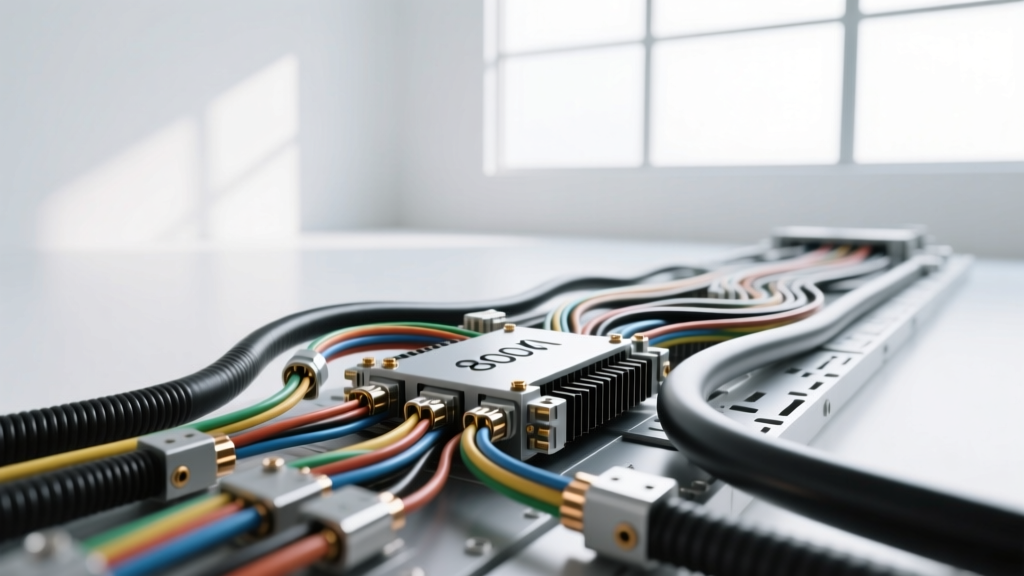
When industry analysts and consumers discuss the recent Slate Auto electric pickup price increase, the conversation often defaults to battery cell chemistry, lithium market volatility, or general supply chain inflation. However, as automotive electrical engineers, we know that a significant portion of an electric vehicle's Bill of Materials (BOM) and subsequent MSRP adjustments are buried deep within the high-voltage (HV) wiring harness, power distribution units (PDU), and zonal controller architectures. The transition from legacy 400V platforms to advanced 800V and even 900V architectures—necessary to support the ultra-fast charging and heavy towing demands of modern EV pickups—requires a fundamental redesign of the vehicle's electrical nervous system.
This technical deep dive explores how high-voltage cable specifications, advanced shielding requirements, and the shift toward automotive Ethernet are directly contributing to the Slate Auto electric pickup price increase, and how engineers are attempting to mitigate these costs through material science and topology changes.
Deconstructing the 800V Architecture Shift
To achieve 350kW+ DC fast charging capabilities without requiring liquid-cooled charging cables exceeding 500 amps, next-generation electric pickups are migrating to 800V nominal battery systems. While Ohm's Law (P = V × I) dictates that doubling the voltage halves the current requirement—allowing for a reduction in conductor cross-sectional area—the insulation and safety requirements scale non-linearly.
According to SAE J1673 standards for High Voltage Cable Design, cables operating above 600V DC require significantly thicker insulation layers and more robust electromagnetic interference (EMI) shielding. The primary insulation material shifts from standard cross-linked polyethylene (XLPE) to advanced silicone rubber or specialized fluoropolymers to prevent partial discharge and corona inception at higher altitudes and extreme temperature cycling. This material upgrade alone can increase the per-meter cost of the main HV battery cables by 18% to 24%, a cost directly reflected in the Slate Auto electric pickup price increase.
High-Voltage Harness BOM Comparison: 400V vs. 800V
| Parameter | Legacy 400V System | Next-Gen 800V System | Cost Impact on BOM |
|---|---|---|---|
| Conductor Material | Copper (Class 5 Stranded) | Copper or Aluminum Alloy | Aluminum offsets copper volatility |
| Primary Insulation | XLPE (0.8mm thickness) | Silicone/XLPE Composite (1.4mm+) | +22% material cost |
| EMI Shielding | Braided Copper (85% coverage) | Braided Cu + Aluminum Mylar Wrap | +35% shielding cost |
| Outer Jacket | Orange PVC / TPE | Abrasion-Resistant Orange PUR | +15% jacketing cost |
| Creepage/Clearance | Standard Connectors | Extended Air Gaps / Potting | Requires larger connector housings |
Copper Volatility and the Busbar Revolution
A major driver behind the Slate Auto electric pickup price increase is the raw material cost of copper. A full-size electric pickup truck can contain upwards of 80 kilograms of copper, a significant portion of which is dedicated to the HV harness and motor windings. To combat this, electrical architects are increasingly replacing traditional round, stranded HV cables with extruded aluminum busbars and flexible copper-aluminum laminated strips inside the battery enclosure and PDU.
While aluminum is lighter and cheaper, it introduces severe galvanic corrosion risks when mated to copper terminals. To mitigate this, engineers must employ zinc-nickel plating on aluminum busbars or utilize advanced friction stir welding (FSW) and ultrasonic welding techniques for terminal crimps. Furthermore, aluminum exhibits higher thermal expansion rates than copper. Connector housings must be engineered with specialized floating terminals to accommodate thermal cycling from -40°C to +125°C without inducing micro-fractures in the crimp zone. The R&D and tooling costs for these specialized busbar integration processes are amortized into the vehicle's final price.
Low-Voltage Zonal Architecture and Data Cables
The electrical complexity of an EV pickup extends far beyond the high-voltage traction system. Modern ADAS (Advanced Driver Assistance Systems), battery management systems (BMS), and infotainment networks require massive data throughput. The traditional centralized fuse box and multiplexed CAN-bus architecture are being replaced by Zonal Controllers.
The Shift to Automotive Ethernet
Instead of running hundreds of individual 18 AWG to 22 AWG copper wires from a central gateway to every sensor, zonal architecture uses localized nodes connected via Automotive Ethernet (100BASE-T1 and 1000BASE-T1). This requires unshielded or shielded twisted pair (UTP/STP) cables with strict impedance matching (typically 100Ω ± 10%).
- Cable Type: 1000BASE-T1 Shielded Twisted Pair (STP)
- Wire Gauge: 22 AWG or 24 AWG solid/stranded copper
- Impedance: 100Ω nominal
- Connectors: MATEnet or H-MTD (High-Speed Modular Twisted-Pair Data)
- Jacket Color: Typically Blue or Violet for data, distinct from 12V power
While zonal architecture reduces the total weight of the low-voltage copper harness, the cost per meter of Automotive Ethernet cable and the associated H-MTD connectors is substantially higher than legacy CAN-bus wiring. The Munro & Associates EV teardown analyses frequently highlight how the integration of these high-speed data networks and zonal gateways adds significant silicon and harness costs, contributing to the overall Slate Auto electric pickup price increase.
HVIL Circuits and Safety Interlock Connectors
Safety is non-negotiable in high-voltage EV platforms. The High Voltage Interlock Loop (HVIL) is a critical low-voltage circuit (typically 5V or 12V) that runs through every HV connector in the vehicle. If a connector is unseated, the HVIL circuit breaks, instantly signaling the battery contactors to open and isolate the HV bus before the main HV pins separate, preventing lethal arc flashes.
In next-gen pickups, the TE Connectivity HVA280 or Amphenol AT series connectors are standard. These connectors feature a complex mating sequence:
- First Mate: The HVIL pins (typically 1.2mm or 1.5mm terminals located in positions 3 and 4) make contact first, confirming the connector is fully seated.
- Second Mate: The main HV power pins (e.g., 8.0mm or 14.0mm terminals in positions 1 and 2) engage.
- First Break: Upon removal, the main HV pins separate first while the HVIL remains connected, triggering the contactor shutdown.
- Second Break: The HVIL pins separate, physically isolating the circuit.
Designing, tooling, and testing these multi-stage, IP67/IP69K-rated connectors with integrated Current Monitoring (CM) shunts requires immense capital expenditure. The integration of smart connectors that can report real-time terminal temperature via a secondary CAN signal to the BMS is a premium feature that justifies the Slate Auto electric pickup price increase from a safety and reliability standpoint.
Thermal Derating in Heavy-Duty Towing Applications
Electric pickups are designed for work, meaning they must sustain high continuous currents while towing heavy loads up steep grades. A standard 50mm² (approx. 1/0 AWG) HV cable might be rated for 200A continuous in a passenger sedan. However, in a pickup truck, the underbody routing exposes the harness to ambient temperatures exceeding 85°C near the axles and exhaust-equivalent thermal zones of the rear inverters.
Engineers must apply severe thermal derating curves. To safely carry 250A continuous under high ambient heat, the conductor size must be upsized to 70mm² or 95mm² (approx. 2/0 AWG to 3/0 AWG), and the insulation must be upgraded to high-temperature silicone. This upsizing increases harness weight, stiffness (requiring more robust molded strain-relief boots), and raw material costs.
Conclusion: Navigating EV Electrical BOM Inflation
The Slate Auto electric pickup price increase is not merely a product of market positioning; it is a direct reflection of the extreme electrical engineering required to build a safe, fast-charging, and heavy-duty 800V vehicle. From the transition to silicone-insulated HV cables and aluminum busbars to the implementation of zonal Automotive Ethernet networks and smart HVIL connectors, the electrical architecture of modern EV pickups is vastly more complex and expensive than legacy internal combustion platforms. Understanding these BOM realities provides crucial context for automotive technicians, engineers, and consumers navigating the future of electric mobility.