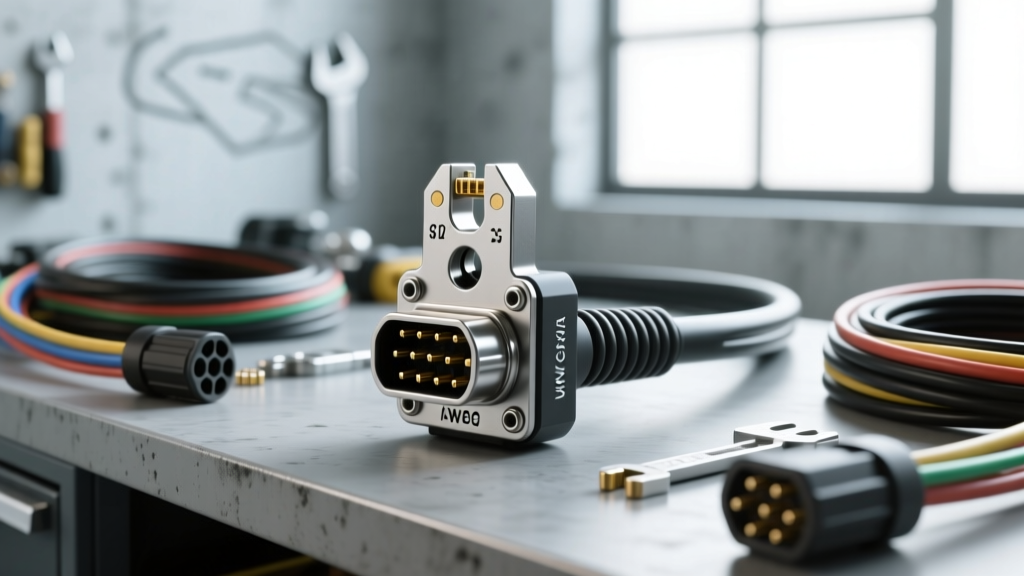
The Hidden Dangers of Male to Female Wiring Harness Adapters
When performing engine swaps, sensor relocations, or bypassing damaged OEM connectors, a male to female wiring harness adapter (often called an extension pigtail or jumper harness) seems like a simple plug-and-play solution. Whether you are extending a GM truck harness to fit an LS3 intake manifold, relocating an oxygen sensor for custom exhaust headers, or bypassing a brittle HVAC plug, these adapters are ubiquitous in the aftermarket. However, treating them as universal, lossless pass-throughs is one of the most common and dangerous mistakes in automotive electrical modification.
Unlike a properly soldered and sealed hardwired splice, an adapter introduces two new mechanical connection points, increases overall circuit resistance, and alters the physical routing of the harness. Below, we break down the critical safety warnings, engineering mismatches, and real-world failure modes associated with male to female wiring harness adapters.
1. The AWG Bottleneck: Thermal Runaway and Voltage Drop
The most pervasive mistake when purchasing or fabricating male to female adapters is ignoring American Wire Gauge (AWG) continuity. Many cheap, mass-produced aftermarket adapters default to 18 AWG wire across all cavities to save on copper manufacturing costs. If you plug an 18 AWG adapter into a factory 12 AWG cooling fan circuit or a 14 AWG oxygen sensor heater circuit, the adapter becomes a severe bottleneck.
According to the SAE J1128 Low Tension Primary Cable Standard, wire gauge must be matched to the maximum continuous current load and the ambient temperature of the engine bay. When an undersized adapter is subjected to high amperage, it experiences I²R (current squared times resistance) heating. This thermal runaway melts the nylon connector housing, causes voltage drop at the sensor, and can lead to an under-hood fire.
Adapter AWG Matching & Failure Mode Chart
| Circuit Type | Factory Wire AWG | Min. Adapter AWG | Max Continuous Load | Common Failure Mode if Mismatched |
|---|---|---|---|---|
| Fuel Injector (Saturated) | 18 AWG | 18 AWG | 4A | Melted Metri-Pack 150 housing, lean misfire |
| Cooling Fan Relay Feed | 10 AWG | 10 AWG | 30A | Thermal runaway, nylon shell fire, open circuit |
| O2 Sensor Heater | 14 AWG | 14 AWG | 12A | Voltage drop, P0031/P0037 codes, slow sensor response |
| CAN Bus Data (High/Low) | 22 AWG (Twisted) | 22 AWG (Shielded) | <1A | U0100 Lost Comm, crosstalk, module bricking |
2. Pin Tension Loss and Micro-Arcing
Female terminals rely on a spring-metal beryllium copper or high-grade brass alloy to grip the male tab. High-quality OEM connectors, such as the Aptiv Weather-Pack and Metri-Pack series, are engineered with specific retention forces. For example, a Metri-Pack 280 female terminal requires a minimum pin retention force of 15 lbs to prevent vibration-induced separation.
Cheap male to female adapters often use stamped, un-heat-treated brass. When these inferior female terminals are mated with OEM male tabs, the initial connection may seem secure. However, under engine vibration and thermal cycling, the brass loses its spring tension. This creates a microscopic air gap that results in micro-arcing. Micro-arcing generates intense localized heat and radio frequency (RF) noise, which can corrupt sensitive 5V reference signals (like a MAF sensor's Yellow signal wire) and ultimately weld the terminal to the male tab, making removal impossible without cutting the harness.
The Danger of Missing Terminal Position Assurance (TPA)
Another critical safety oversight is using adapters that lack a secondary Terminal Position Assurance (TPA) lock. The TPA is the plastic or silicone wedge that locks the crimped terminal into the connector housing. If an adapter relies solely on the terminal's primary barbed latch, the act of plugging and unplugging the harness can push the female terminal backward into the cavity. This results in an intermittent open circuit that is notoriously difficult to diagnose, often manifesting as random stalling or phantom ABS faults.
3. Environmental Sealing Bypass: The Weather-Pack Trap
Automotive connectors in the engine bay and undercarriage must withstand water, oil, and road salt. OEM harnesses achieve this using ribbed silicone seals that compress tightly around the wire insulation. When utilizing a male to female adapter, the environmental seal must be maintained at both mating junctions.
Common Mistake: Using a universal adapter kit that does not include the correct cavity-specific silicone plugs. For instance, attempting to use a Metri-Pack 150 seal in a Metri-Pack 280 cavity leaves a massive gap. Moisture ingress quickly leads to galvanic corrosion. You will recognize this failure mode by the presence of a green, crusty copper oxide buildup on the male tab. Once corrosion sets in, circuit resistance spikes, and the PCM will throw low-voltage circuit codes (e.g., P0131 for O2 Sensor Low Voltage).
Safety Warning: Never apply dielectric grease directly onto the mating faces of high-current adapter pins. While dielectric grease is excellent for sealing the exterior rubber boots, placing it between the male and female metal terminals can increase contact resistance and trap heat, accelerating the melting of the nylon shell.
4. CAN Bus Data Corruption and Impedance Mismatch
Modern vehicles rely on Controller Area Network (CAN) buses to communicate between the ECM, TCM, and BCM. CAN-High and CAN-Low signals require strictly controlled impedance (typically 120 ohms) and twisted-pair wiring to cancel out electromagnetic interference (EMI).
When extending a CAN bus harness using a standard male to female adapter, many builders use standard untwisted, unshielded 18 AWG wire. Separating the CAN-H and CAN-L wires inside the adapter loom destroys the twisted-pair geometry. This impedance mismatch causes signal reflection and crosstalk. The result is a cascade of U-codes (Network Communication Codes), erratic gauge cluster behavior, and the vehicle entering limp mode. If you must use an adapter for a data line, it must feature factory-twisted, shielded 22 AWG wire with the shield drain wire properly grounded at the ECM side only.
Diagnostic Decision Tree: Is Your Adapter Failing?
If you have recently installed a male to female wiring harness adapter and are experiencing electrical gremlins, follow this diagnostic tree based on Haynes Manual Circuit Testing Guidelines:
- Symptom: Sensor reads 0.00V or 5.00V constantly, no fluctuation.
- Cause: Female terminal backed out due to missing TPA; no physical contact with male tab.
- Fix: Unplug adapter, use a terminal pick to pull the female pin forward until it clicks, and install a proper TPA lock.
- Symptom: Connector shell is discolored (brown/black) and smells like burning plastic.
- Cause: AWG mismatch causing thermal overload, or micro-arcing from poor pin tension.
- Fix: Cut out the adapter. Verify factory wire gauge, and solder/seal a new pigtail using the correct AWG wire and heat-shrink butt connectors. Do not reuse melted terminals.
- Symptom: Intermittent stalling or random transmission shift codes when hitting bumps.
- Cause: Vibration-induced tension loss in cheap brass adapter terminals.
- Fix: Replace the adapter with an OEM-grade pigtail featuring beryllium copper terminals and verify the primary latch is fully seated.
Conclusion: Respect the Pass-Through
A male to female wiring harness adapter is a valuable tool for the automotive electrician, but it is not a shortcut around proper engineering. Always verify the AWG rating of the adapter wires against the factory service manual specifications. Inspect the female terminals for proper beryllium copper construction, ensure the TPA locks are engaged, and never compromise the environmental silicone seals. By treating adapter selection with the same rigor as a custom harness fabrication, you ensure the safety, reliability, and performance of your vehicle's electrical system.