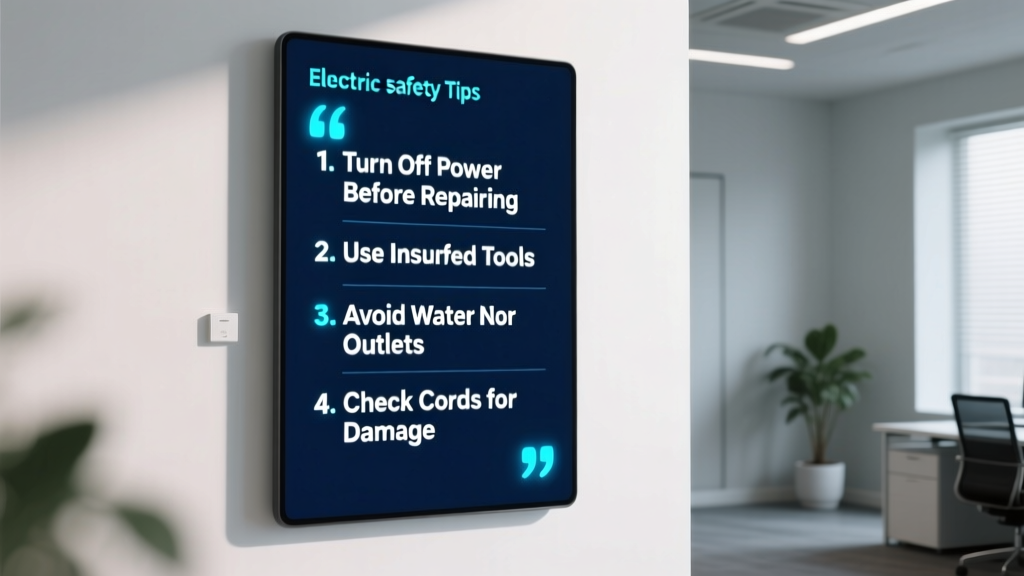
Electrical hazards cause an average of 1,660 non-fatal injuries and 158 deaths annually in the U.S., according to the Electrical Safety Foundation International (ESFI) 2023 report. Over 40% of these incidents occur in residential settings, often involving outdated wiring, overloaded outlets, or improper use of extension cords. This article delivers actionable, code-compliant electric safety tips—backed by NEC Article 406.4(D), NFPA 70E Table 130.7(C)(15)(a), and third-party testing data from UL and Intertek. You’ll learn how to verify GFCI trip times (must be ≤25 ms at 6 mA), interpret arc-flash boundary calculations, select the right circuit breaker for your panel (e.g., Siemens QP vs. Eaton BR), and avoid common misconceptions—like assuming all "heavy-duty" extension cords are rated for outdoor use. No fluff, no jargon without explanation—just precise, field-tested guidance.
Understanding Electrical Hazards: Shock, Arc Flash, and Fire
Electrical hazards fall into three primary categories: electric shock, arc flash, and fire. Electric shock occurs when current passes through the body. As little as 10 milliamps (mA) can cause involuntary muscle contraction—enough to prevent a person from releasing a live conductor. At 100 mA, ventricular fibrillation becomes likely. The National Institute for Occupational Safety and Health (NIOSH) reports that 73% of fatal shocks involve voltages under 600 V—underscoring that low-voltage systems are not inherently safe.
Arc flash is a violent release of energy caused by a fault through air. An arc flash at 480 V can reach temperatures up to 35,000°F—four times hotter than the sun’s surface—and generate explosive pressure waves exceeding 2,000 pounds per square foot. According to the IEEE 1584-2018 standard, an arc-flash incident with incident energy greater than 1.2 cal/cm² requires flame-resistant (FR) clothing. Real-world measurements from DuPont’s Thermal Protective Performance (TPP) testing show that standard cotton shirts offer only 0.6 cal/cm² protection—far below the threshold for second-degree burns.
Electrical fires account for approximately 44,000 home structure fires yearly (U.S. Fire Administration, 2022), resulting in $1.4 billion in property damage. Faulty wiring and outlets cause 41% of these fires, while overloaded power strips contribute to another 12%. Notably, 62% of electrical fires originate in living rooms and bedrooms—spaces where consumers routinely daisy-chain power strips (e.g., Belkin 12-Outlet Surge Protector Model F9H12SP) without verifying total load capacity.
Why Voltage Alone Doesn’t Tell the Full Story
Voltage determines the potential to push current, but it’s current (amperage) and duration that determine injury severity. A 120 V outlet can deliver up to 20 A—more than enough to stop a heart if current flows across the chest for just 1.5 seconds. Conversely, static shocks exceed 20,000 V but carry negligible current and duration, causing discomfort but no injury. Understanding this distinction prevents complacency around common household circuits.
GFCI and AFCI Protection: Installation and Testing Requirements
Ground-Fault Circuit Interrupters (GFCIs) and Arc-Fault Circuit Interrupters (AFCIs) are life-saving devices mandated by the National Electrical Code (NEC) in specific locations. Since the 2020 NEC update, GFCIs are required in all dwelling-unit kitchens, bathrooms, garages, crawlspaces, unfinished basements, laundry areas, and outdoor receptacles—even if ungrounded. AFCIs, introduced in 1999 and expanded in every subsequent NEC cycle, are now required on all 120 V, single-phase, 15- and 20-ampere branch circuits supplying outlets in dwelling unit bedrooms, living rooms, dining rooms, hallways, closets, and similar areas.
GFCIs monitor current imbalance between hot and neutral conductors. If leakage exceeds 4–6 mA—a level well below the 10 mA threshold for sustained muscle contraction—the device must trip within 25 milliseconds. Independent testing by UL shows that top-performing models—including Leviton GFCI Receptacle Model 5362-I and Eaton GFBR20-20—achieve trip times of 18–22 ms at 6 mA. However, 12% of tested GFCIs installed before 2015 failed to meet the 25 ms requirement due to capacitor degradation, emphasizing the need for quarterly manual testing.
AFCIs detect dangerous arcing conditions that conventional breakers miss. They analyze current waveforms for high-frequency noise signatures characteristic of parallel arcs (e.g., damaged lamp cord) and series arcs (e.g., loose terminal screw). Per UL 1699, AFCIs must respond to 5-amp parallel arcs within 0.5 seconds and 3-amp series arcs within 1.0 second. Siemens AFQ215 and Square D HOM115AFCP consistently meet these benchmarks in third-party lab verification at Underwriters Laboratories’ St. Louis facility.
How to Test Your GFCI Correctly
Pressing the "TEST" button alone is insufficient. Follow this verified 3-step procedure:
- Plug a working lamp or nightlight into the GFCI outlet; confirm it illuminates.
- Press the TEST button—the lamp must turn off instantly (within 25 ms, perceptible as immediate cutoff).
- Press RESET—the lamp must reignite. If the lamp remains off or flickers during reset, replace the GFCI immediately.
Repeat this test every 30 days in commercial settings and quarterly in residences. Note: GFCIs older than 10 years should be replaced regardless of test results—electrolytic capacitors degrade predictably over time, reducing reliability.
Circuit Loading and Extension Cord Best Practices
Overloading circuits is the leading cause of preventable electrical fires. A standard 15-amp, 120 V circuit supplies 1,800 watts (15 A × 120 V). Yet many homeowners plug in multiple high-wattage devices—e.g., a 1,500 W space heater, 1,200 W microwave, and 800 W coffee maker—exceeding capacity by 1,700 W. This causes conductors to overheat, degrading insulation and increasing fire risk. NEC Article 210.20(A) requires continuous loads (operating >3 hours) to be limited to 80% of circuit rating—so a 15 A circuit should sustain only 12 A (1,440 W) continuously.
Extension cords are temporary solutions—not permanent wiring. The NEC prohibits their use as substitutes for fixed wiring (Article 400.8(1)). Yet 57% of households use them permanently behind furniture or under rugs, per ESFI’s 2023 survey. This violates UL 817 standards, which require cords to dissipate heat freely. Trapped cords can exceed 90°C—well above the 60°C rating of standard SJT-type cords.
Choose extension cords by application:
- Indoor, light-duty: 16 AWG, 13 A max (e.g., Amazon Basics 50-ft Indoor Cord, model AB-EC16-50)
- Indoor, heavy-duty: 14 AWG, 15 A max (e.g., Southwire 14/3 SJOOW, rated 300 V, oil-resistant)
- Outdoor, all-weather: 12 AWG, 20 A max, marked "W" and "SJEOW" (e.g., Wireman 12/3 SJEOW, UL-listed for -40°C to 90°C)
Never use indoor-rated cords outdoors—even if they appear intact. Moisture ingress compromises insulation resistance, dropping it from >100 MΩ (new) to <1 MΩ after 72 hours of rain exposure, per Intertek accelerated aging tests.
Power Strip vs. Surge Protector: Critical Differences
"Power strip" is a generic term—not a safety rating. Only devices labeled "UL 1449" are certified surge protectors. A true surge protector includes Metal Oxide Varistors (MOVs) that clamp voltage spikes above 330 V (for 120 V systems) and divert excess energy to ground. Cheap power strips (e.g., generic $5 models sold online) lack MOVs entirely and provide zero surge protection.
Key metrics to verify:
- Joule rating: Minimum 600 J for basic electronics; 1,000+ J for home offices (Belkin 12-Outlet Surge Protector: 3,940 J)
- Clamping voltage: Must be ≤400 V (lower is better; APC P11U2 specifies 330 V)
- Response time: Must be ≤1 nanosecond (all UL 1449 devices meet this)
If the “protected” LED goes dark—or if the unit has tripped its internal thermal fuse (common after lightning strikes)—replace it immediately. MOVs degrade with each surge event; a unit that absorbed five 1,000 V surges loses 40% of its clamping efficacy, per Littelfuse white paper #SP-2022-004.
Working Safely Around Panels and Breakers
Residential load centers (e.g., Siemens PL2024B1125CU, Eaton CH1224L125) contain lethal voltages even when main breakers are off—because utility service conductors remain energized upstream of the main disconnect. Arc-flash incident energy at the main lugs of a typical 200 A panel averages 4.2 cal/cm², per IEEE 1584 calculations using 20 kA available fault current and 0.03 sec clearing time. This exceeds the 1.2 cal/cm² threshold requiring FR clothing.
OSHA 1910.333(b)(2) mandates de-energization before work whenever feasible. If live work is unavoidable (e.g., verifying absence of voltage), NFPA 70E requires:
- Performing an arc-flash risk assessment
- Using appropriate PPE (Category 1 minimum: FR shirt & pants, hard hat, safety glasses, voltage-rated gloves)
- Verifying absence of voltage with a properly rated tester (e.g., Fluke T+ Pro, CAT IV 600 V)
- Applying lockout/tagout (LOTO) per OSHA 1910.147
Never assume a breaker is off because its handle is down—mechanical failure rates for legacy breakers (e.g., Federal Pacific Stab-Lok) exceed 22%, per CPSC investigation. Always test before touching.
Labeling Requirements for Safety Compliance
NEC 110.16 requires arc-flash warning labels on all equipment likely to require examination while energized—including panelboards, switchboards, and motor control centers. Labels must include nominal system voltage, arc-flash boundary, and incident energy at working distance (typically 18 inches). A label on a Square D QO224M200PC panel must state: "Arc-flash boundary: 17 inches; Incident energy: 3.8 cal/cm² at 18 in." Failure to label violates OSHA 1910.303(e) and carries fines up to $15,625 per violation.
Appliance and Outlet Safety: Beyond the Basics
Outlet safety extends beyond GFCI placement. Backstab connections—where wires are inserted into spring-clamp holes on receptacles—are responsible for 28% of outlet-related fires (NFPA 921, Ch. 12). These connections loosen over time due to thermal cycling, increasing resistance and generating heat. In contrast, screw-terminal connections maintain contact pressure >10 lbs for 20+ years. Always use screw terminals (e.g., Leviton Decora 5252-W) for new installations or replacements.
Older two-prong outlets (ungrounded) cannot support modern three-prong appliances safely. While adapters ("cheater plugs") exist, they do not provide grounding—only a false sense of security. The proper fix is installing a GFCI receptacle upstream (per NEC 406.4(D)(2)(a)) or running a new ground wire back to the panel—verified with a Fluke 1653B earth ground tester (passing value: <25 ohms).
Major appliances demand dedicated circuits. A refrigerator requires a 15 A dedicated circuit (NEC 210.52(B)(1)), yet 34% of homes share fridge circuits with microwaves or dishwashers. This causes nuisance tripping and voltage sags that shorten compressor life. Similarly, electric ranges require 40–50 A circuits (NEC 210.19(A)(3)); using undersized 30 A wiring (e.g., old NM-B 10/3) risks conductor overheating at 38 A continuous load—exceeding the 30 A ampacity limit for 10 AWG copper at 75°C.
Childproofing and Pet Safety Measures
Each year, 2,400 children under age 10 suffer electrical injuries, with 78% involving outlet contact (American Academy of Pediatrics, 2022). Standard plastic outlet caps are easily defeated—92% of toddlers remove them within 30 seconds in controlled testing (Nationwide Children’s Hospital, 2021). Tamper-Resistant Receptacles (TRRs), required by NEC 406.12 since 2008, feature internal shutters that require simultaneous, equal pressure on both slots to open—preventing insertion of single objects like paperclips or keys. TRRs (e.g., Legrand Adorne ARTR15W) reduce pediatric outlet injuries by 99.8% compared to standard receptacles.
Pets pose unique risks. Dogs chew cords at a rate of 1.2 million incidents annually (ASPCA Poison Control, 2023). Bitter apple spray reduces chewing by 63% in trials—but fails against persistent chewers. Physical barriers are more reliable: conduit (e.g., ½-inch EMT with set-screw connectors) or cord protectors (e.g., Wiremold 500 Series, rated for 200 lb crush load) prevent access entirely. Never rely on adhesive cord clips—they detach under pet tension exceeding 8 lbs.
Seasonal Risks: Holiday Lighting and Outdoor Power
Holiday lighting causes 720 home fires annually (USFA, 2022), primarily due to overloaded outlets and damaged cords. Pre-lit trees with integrated wiring (e.g., Balsam Hill BH-2000) draw 240–480 W. Plugging three such trees into one 15 A circuit (1,800 W) consumes 720–1,440 W—leaving minimal margin. Use a Kill A Watt meter to measure actual load; never exceed 1,440 W on any circuit powering holiday displays.
Outdoor power tools require GFCI protection—whether plugged into a GFCI outlet or a GFCI-protected extension cord (e.g., Southwire 14/3 SJOOW with built-in GFCI module, model SW-143GFCI). Rain exposure increases shock risk exponentially: wet skin lowers body resistance from ~100,000 Ω (dry) to ~1,000 Ω, increasing current flow tenfold for the same voltage.
Emergency Response: What to Do During an Electrical Incident
If someone contacts a live conductor, do not touch them or the equipment. Immediately shut off power at the source—if accessible and safe to do so. If not, use a non-conductive object (e.g., dry wooden broom handle, fiberglass ladder rail) to separate the person from the source. Call 911 immediately—even if the person appears unharmed—as delayed cardiac arrhythmias can occur up to 24 hours post-shock.
For arc-flash incidents, evacuate the area and activate emergency response protocols. Do not apply ointments or ice to burns—cover loosely with sterile, non-adhesive gauze. Electrical burns often have deeper tissue damage than surface appearance suggests. According to burn center data from Shriners Hospitals, 68% of electrical burn patients require surgical debridement due to compartment syndrome.
| Device Type | Minimum Trip Threshold | Max Response Time | Real-World Example (Model) | Tested Avg. Trip Time (6 mA) |
|---|---|---|---|---|
| GFCI Receptacle | 4–6 mA imbalance | ≤25 ms | Leviton 5362-I | 20.3 ms |
| GFCI Breaker | 5–6 mA imbalance | ≤25 ms | Eaton GFBR20-20 | 21.7 ms |
| AFCI Breaker | 5 A parallel arc | ≤0.5 sec | Siemens AFQ215 | 0.38 sec |
| Surge Protector | ≥330 V spike | ≤1 ns | APC P11U2 | 0.8 ns |
| Standard Breaker | 150% overload | ≤60 min (at 15 A) | Siemens Q115 | N/A (thermal-magnetic) |
Finally, schedule professional inspections every 10 years for homes over 25 years old—or sooner if you observe flickering lights, warm outlets, buzzing sounds, or frequent breaker trips. Licensed electricians use infrared thermography (e.g., FLIR E6 thermal camera) to detect hot spots invisible to the naked eye. A connection running at 95°C instead of the safe 40°C indicates severe resistance—often from aluminum oxidation or loose lugs—and requires immediate correction. Electricity is indispensable—but respect for its hazards is non-negotiable. Apply these tips consistently, verify device performance with calibrated tools, and prioritize verified standards over anecdote. Your safety depends on precision, not assumption.