The Intersection of Auto-Electrical and Commercial Surveillance
As the automotive aftermarket shifts toward advanced fleet management, 12V auto-electricians are increasingly tasked with installing Mobile Digital Video Recorders (MDVRs), interior cabin surveillance, and exterior cargo security cameras. However, a critical legal and technical blind spot plagues many professionals transitioning from standard car audio or basic backup camera installations into commercial fleet surveillance. The most common administrative mistake? Failing to recognize when a state-mandated security camera installer license is legally required to wire hardline commercial surveillance systems into transit buses, freight trucks, or municipal fleets.
The Legal Trap: When Auto Wiring Requires a Security Camera Installer License
Many auto-electricians assume that because the 'premises' is a vehicle, standard automotive mechanical repair laws apply. This is a dangerous misconception. In numerous jurisdictions (including California, Texas, and Florida), installing CCTV or surveillance equipment that records audio/video and transmits data via cellular networks for security or loss-prevention purposes falls under low-voltage security alarm regulations. If you are wiring a multi-channel 4G/5G MDVR system designed to prevent cargo theft or monitor driver behavior, state licensing boards often classify this as commercial security work. Operating without a valid security camera installer license or a low-voltage contractor exemption can result in severe fines, voided commercial insurance policies, and invalidated fleet contracts. Always consult your state's Private Security Bureau or equivalent contractor licensing board before bidding on fleet surveillance contracts.
Critical Wiring Mistakes in Fleet MDVR Installations
Beyond legal compliance, the physical installation of fleet surveillance systems requires a deep understanding of heavy-duty automotive electrical systems. Commercial vehicles (like the Freightliner Cascadia or Ford Transit) present harsh electrical environments characterized by voltage spikes, alternator whine, and CAN bus sensitivity. Below are the most severe technical mistakes made by installers lacking specialized MDVR training.
Mistake 1: Using Standard RCA/BNC Instead of M12 Aviation Connectors
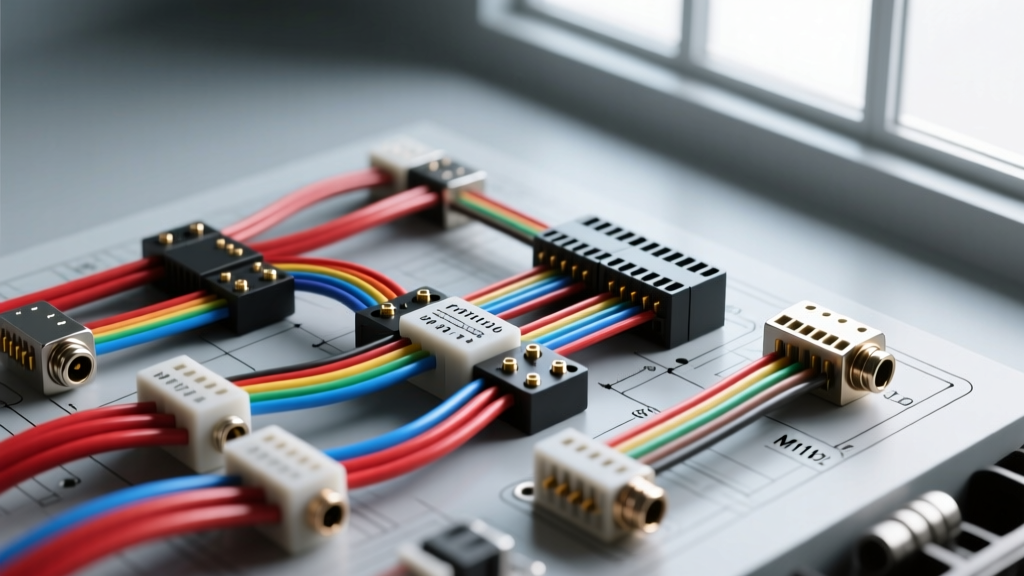
In standard passenger vehicle dashcam installs, RCA or BNC connectors are sometimes used for analog video feeds. In a commercial fleet environment, this is a catastrophic failure point. Heavy vibration and thermal cycling will quickly loosen standard friction-fit connectors, leading to video loss or short circuits. Professional MDVR systems require M12 Aviation Connectors, which feature threaded locking collars. Installers must understand the difference between M12 pinouts to avoid frying camera sensors or PoE (Power over Ethernet) switches.
- M12 A-Code (4-Pin): Used for Analog AHD/TVI cameras. Pin 1: VCC (12V), Pin 2: GND, Pin 3: Audio, Pin 4: Video.
- M12 D-Code (4-Pin): Used for IP Cameras and Ethernet data. Pin 1: TX+, Pin 2: RX+, Pin 3: TX-, Pin 4: RX-. (Note: D-Code does not carry 12V power; PoE requires 8-pin X-Code or specialized M12 PoE injectors).
Mistake 2: Tapping CAN Bus for Ignition Sense Without Isolation
To trigger the MDVR's recording and sleep modes, installers need an ignition sense signal. A common, destructive mistake is back-probing the vehicle's OBDII port or CAN bus lines (CAN-H / CAN-L) to read ignition status via software. Tapping directly into high-speed CAN bus lines (which operate at 500 kbps with low voltage differentials) with standard solder taps or T-taps introduces capacitance and impedance mismatches. This will throw U-codes (communication network faults) and can disable critical vehicle safety systems like ABS or lane-departure warnings. Always use a dedicated, isolated ignition sense wire tied to a switched 12V accessory circuit, or use a non-intrusive CAN bus decoder module with opto-isolated outputs.
Mobile DVR (MDVR) Power & Ground Specifications
The main power harness of a commercial MDVR dictates the stability of the entire surveillance network. Commercial trucks operate on 24V systems (though many MDVRs feature internal step-down converters, it is vital to verify input tolerances). Below is the standard 8-pin main power harness specification for heavy-duty MDVR units.
| Pin | Function | Wire Color | AWG Size | Connection Point & Notes |
|---|---|---|---|---|
| 1 | BAT+ (Constant) | Red | 12 AWG | Direct to battery positive via 30A Maxi fuse. |
| 2 | GND (Chassis) | Black | 12 AWG | Clean bare metal. M6 ring terminal, 8-10 Nm torque. |
| 3 | ACC (Ignition) | Yellow | 18 AWG | Switched 12V/24V accessory circuit (e.g., upfitter switch). |
| 4 | Delay/Timer | White | 22 AWG | Optional: Connect to GND to force extended recording post-ignition. |
| 5 | Sensor Input 1 | Green | 22 AWG | Door open trigger or panic button (Active Low/Ground trigger). |
| 6 | RS485+ | Orange | 22 AWG | PTZ Camera control or external telematics data. |
| 7 | RS485- | Brown | 22 AWG | PTZ Camera control or external telematics data. |
| 8 | Reserved | Grey | N/A | Do not connect. Heat shrink and secure. |
Safety Warnings: Chassis Grounding vs. Isolated Grounds
One of the most frequent troubleshooting calls an MDVR technician receives is regarding 'alternator whine' in the audio feeds or rolling horizontal bars on the video feeds. This is caused by a ground loop. Commercial vehicle chassis are massive, and voltage potential can vary by several hundred millivolts between the front cab and the rear cargo area. If the MDVR main unit is grounded to the cab chassis, but the rear cargo camera is grounded to the trailer chassis, the coaxial shield of the video cable becomes the path of least resistance for the return current.
The Fix: Never rely on the camera's mounting bracket for a ground. Run a dedicated 18 AWG ground wire from the camera's M12 connector back to the MDVR's main ground distribution block. If the trailer and cab grounds cannot be unified, you must install a BNC/M12 video ground loop isolator (transformer-based) inline with the video feed to break the DC continuity while allowing the AC video signal to pass. Furthermore, ensure all ground ring terminals are crimped using a calibrated ratcheting tool and bolted to bare, unpainted steel. Torque M6 hardware to 8-10 Nm to prevent loosening from chassis vibration, and coat the terminal in dielectric grease to prevent galvanic corrosion.
Lithium Backup Battery Fire Risks
Modern MDVRs contain internal Lithium-Ion or Supercapacitor banks to ensure 'parking mode' or 'delayed shutdown' recording when the vehicle battery is disconnected during a crash or theft attempt. A critical safety warning: never splice or modify the internal battery harness. If the main 12 AWG external power leads are shorted during installation before the inline Maxi fuse is connected, the internal battery can experience thermal runaway. Always connect the main ground, then the main positive, and finally insert the fuse holder as the absolute last step in the power-up sequence.
Authoritative References & Standards
When designing and installing fleet surveillance systems, adherence to established electrical and legal standards is non-negotiable. Professionals should reference the following authorities to ensure compliance and system reliability:
- State Licensing Boards: Verify low-voltage and surveillance requirements via your local authority. For example, the Texas Department of Public Safety Private Security Bureau outlines strict regulations regarding who can install and maintain commercial security and surveillance equipment, which frequently encompasses hardwired fleet tracking and camera systems.
- SAE J1292 (Automotive Electrical Systems): The SAE J1292 standard provides critical guidelines for overcurrent protection and wiring practices in automotive environments, ensuring your AWG selections and fuse placements meet heavy-duty vibration and thermal standards.
- FCC Equipment Authorization: Because fleet MDVRs transmit via 4G/LTE and Wi-Fi, they are subject to strict RF emission standards. Installers must ensure antenna placements do not violate FCC SAR (Specific Absorption Rate) limits for cabin occupants. Review the FCC Equipment Authorization Procedures to understand compliance requirements for aftermarket RF transmitting devices in commercial vehicles.