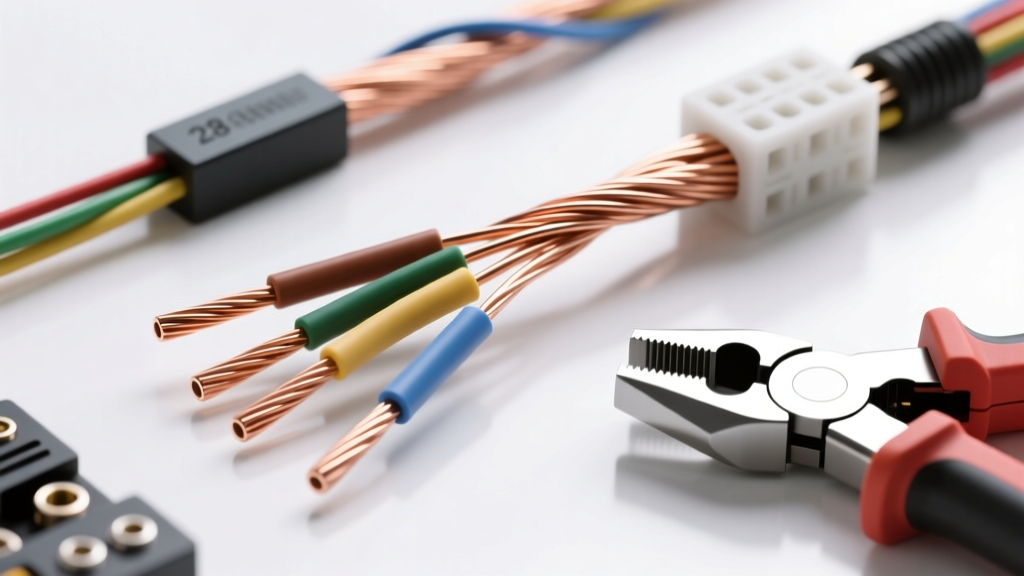
Understanding 28 Gauge Wire in Modern Automotive Systems
As automotive electrical architectures evolve toward high-speed data networks and miniaturized sensors, the physical footprint of wiring harnesses has shrunk dramatically. Enter 28 gauge wire (AWG 28). With a bare conductor diameter of just 0.0126 inches (0.321 mm) and a cross-sectional area of 0.0804 mm², 28 AWG is strictly a signal and data conductor. It is entirely unsuited for power delivery, boasting an ampacity of roughly 1.4 amps for chassis wiring and a resistance of approximately 65.3 ohms per 1,000 feet.
In modern vehicles, 28 gauge wire is predominantly found in LIN (Local Interconnect Network) bus communications, steering wheel clock spring assemblies, airbag squib monitoring circuits, and delicate ECU sensor traces. Because these circuits operate on low-voltage, low-current signals (typically 5V to 12V at milliamp levels), voltage drop over short distances is manageable. However, the physical fragility of 28 AWG demands specialized repair techniques, specific micro-terminals, and a thorough understanding of material costs.
Cost Analysis: Insulation Materials and Conductor Types
When sourcing 28 gauge wire for automotive repair, the cost of the copper itself is negligible. The price variance is driven almost entirely by the insulation material, the stranding configuration, and the conductor plating. Standard solid-core 28 AWG is inexpensive but will quickly suffer from work-hardening and snapping under the constant vibration of a vehicle chassis. Automotive applications mandate multi-strand configurations (typically 7-strand or 19-strand micro-bundling) to maintain flexibility.
| Insulation / Conductor Type | Temp Rating | Est. Cost per 100 ft | Primary Automotive Use Case |
|---|---|---|---|
| Standard PVC (7-Strand Tin-Plated) | 105°C | $12.00 - $18.00 | Interior cabin routing, low-heat sensor pigtails |
| XLPE (Cross-Linked Polyethylene) | 125°C - 150°C | $28.00 - $35.00 | Engine bay sensor pigtails, ABS module wiring |
| PTFE (Teflon) Tin-Plated | 200°C | $75.00 - $90.00 | High-heat exhaust proximity sensors, turbo actuators |
| PTFE Silver-Plated Copper | 200°C+ | $130.00 - $160.00 | Motorsport ECU harnesses, aerospace, MIL-SPEC |
The Economics of OEM vs. Aftermarket Micro-Wire
Purchasing OEM pigtail repair kits from a dealership often costs between $45 and $85 for a single 12-inch connector with pre-crimped 28 AWG leads. While expensive, these kits guarantee the correct SAE J1128 Low Tension Primary Cable Standard compliance and exact terminal matches. For independent shops or advanced DIYers, buying a 100-foot spool of high-quality XLPE 28 AWG wire ($30) and a pack of 50 micro-terminals ($15) reduces the per-repair material cost to under $1.50, provided you possess the correct tooling.
The Tooling Challenge: Why Standard Crimpers Destroy 28 AWG
The most common point of failure in micro-gauge circuit repair is the crimp joint. Standard automotive ratcheting crimpers—designed for Weather-Pack, Metri-Pack, or Deutsch DT contacts—bottom out at 20 or 22 AWG. Attempting to crimp 28 gauge wire with a standard 22 AWG die will result in a crushed conductor, severed strands, or a cold joint that lacks the necessary mechanical pull-force retention. According to the IPC/WHMA-A-620 Wire Harness Acceptance Standards, a proper micro-crimp must exhibit a visible wire brush (strands extending slightly past the terminal bellmouth) without compromising the insulation grip.
Essential Stripping Tools for 0.32mm Conductors
Standard automatic wire strippers will catch and snap the delicate strands of 28 AWG wire. You must use precision micro-shears or specialized micro-strippers. The Knipex 12 12 11 precision stripper is engineered specifically for AWG 28 to 32, utilizing a microscopic blade aperture that scores the insulation without nicking the copper. Alternatively, using a high-quality thermal wire stripper (which melts the PVC/XLPE insulation away) eliminates mechanical stress on the conductor entirely, though thermal strippers carry a higher initial equipment cost.
Precision Micro-Crimpers and Die Profiles
To properly terminate 28 gauge wire, you need a crimper with a micro-die set capable of applying exact pressure to terminals with a wire barrel width of less than 1.5mm.
| Tool Model | AWG Range | Best For Terminal Types | Est. Cost |
|---|---|---|---|
| Engineer PA-09 | 28 - 20 AWG | JST SH, Molex Pico-EZmate, Micro-JST | $45.00 |
| IWISS SN-28B | 28 - 18 AWG | Dupont 2.54mm, JST PH, small PCB headers | $35.00 |
| Knipex 97 51 10 | 28 - 20 AWG | TE Connectivity NanoMQS, micro-blade | $110.00 |
| TE Connectivity CERTI-CRIMP II | 28 - 24 AWG | OEM TE Micro-MaTch, specific NanoMQS | $450.00+ |
Connector Ecosystem: Sourcing Micro-Terminals
When repairing a 28 AWG circuit, you cannot simply swap in a standard 22 AWG terminal and fold the excess wire over. The terminal must match the wire gauge to ensure the insulation crimp secures the wire jacket and the conductor crimp secures the copper. The automotive industry relies heavily on miniaturized connector ecosystems for these delicate circuits:
- TE Connectivity NanoMQS: Specifically designed for high-pin-count ECU connectors where space is at a premium. The NanoMQS system reliably handles 28 AWG wire and is ubiquitous in modern European vehicle sensor networks. You can review the TE Connectivity NanoMQS Automotive Terminals specifications for exact pull-out force tolerances.
- Molex Pico-EZmate (78171 Series): A 1.20mm pitch wire-to-board connector frequently used in tight spaces like steering column control modules and seat occupancy sensors.
- JST SH (1.0mm Pitch): While more common in consumer electronics and drone builds, JST SH connectors are increasingly found in aftermarket automotive sensors, GPS trackers, and dashcam hardwire kits that tap into low-current CAN/LIN networks.
Step-by-Step: Repairing a LIN Bus Clock Spring Pigtail
A common failure point involving 28 gauge wire is the clock spring (spiral cable) assembly behind the steering wheel. The LIN bus wire connecting the steering angle sensor to the SCCM (Steering Column Control Module) is often 28 AWG to allow for tight winding inside the cassette. If this wire snaps or the terminal backs out of the connector, follow this micro-repair procedure:
- Preparation: Disconnect the battery and wait 15 minutes for the airbag backup capacitors to discharge. Cut the damaged wire back to a point where the insulation is pristine and free of capillary corrosion.
- Stripping: Using a Knipex micro-stripper, remove exactly 1.5mm of insulation. Do not twist the 19-strand micro-bundle; keep the strands parallel.
- Terminal Loading: Insert the TE NanoMQS or OEM-specific 28 AWG terminal into the Engineer PA-09 crimper. Ensure the wire barrel is facing the correct die profile (usually the smaller, U-shaped inner die).
- Crimping: Insert the bare 0.32mm conductor fully into the wire barrel until it hits the stop. Squeeze the ratcheting crimper until it releases. Inspect for the microscopic wire brush extending 0.2mm past the terminal.
- Sealing: Because 28 AWG is highly susceptible to galvanic corrosion, slide a piece of 3/32-inch dual-wall adhesive-lined heat shrink over the joint. Apply heat until the adhesive purges slightly from the ends, creating a hermetic seal against moisture wicking.
Common Failure Modes in Micro-Gauge Circuits
When diagnosing faults in circuits utilizing 28 gauge wire, technicians must look beyond standard multimeter continuity tests. A single strand of 28 AWG can maintain continuity (showing 0.2 ohms on a meter) but will instantly fail under the micro-amp load of a data signal due to high resistance at a fractured point.
- Capillary Wicking: If the insulation jacket is nicked, moisture will wick down the microscopic spaces between the copper strands via capillary action, leading to green copper oxide corrosion deep inside the harness. This requires cutting the wire back several inches to find clean copper.
- Vibration-Induced Work Hardening: Solid-core or improperly stranded 28 AWG wire will become brittle when subjected to engine or chassis vibration. The copper crystallizes and snaps cleanly. Always verify that replacement wire is multi-stranded and automotive-rated.
- Terminal Back-Out: Micro-terminals have very small locking barbs. If the terminal was crimped with an oversized tool, the insulation grip will fail to hold the wire jacket. When the connector is mated, the insertion force pushes the 28 AWG terminal backward out of the housing, resulting in an intermittent open circuit.
By investing in the proper micro-crimping tooling and understanding the material economics of 28 gauge wire, automotive electrical specialists can execute invisible, OEM-quality repairs on the most delicate data networks in modern vehicles.