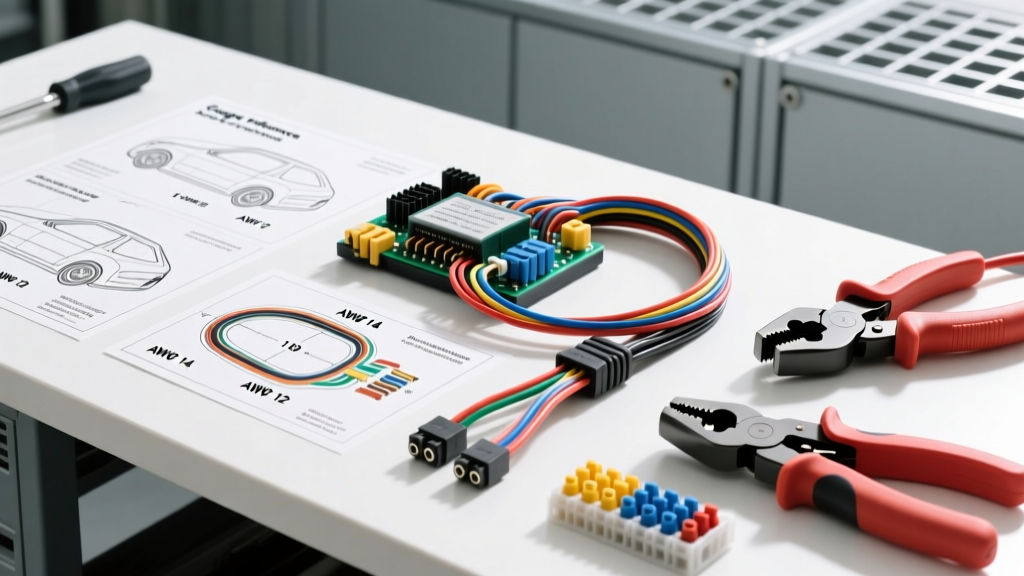
The Core Question: What Gauge Wire for 15 Amp Automotive Loads?
When building or repairing a 15-amp circuit in a 12V-14.4V automotive electrical system, selecting the correct wire gauge is critical for safety and performance. The direct answer to what gauge wire for 15 amp continuous loads is 14 AWG for runs under 10 feet, and 12 AWG for runs exceeding 10 feet or routed through high-ambient-heat zones like the engine bay. However, in automotive applications, the American Wire Gauge (AWG) standard must be cross-referenced with SAE J1128 standards for low-tension automotive cable, which dictates insulation thickness, temperature ratings, and copper stranding.
Standard PVC primary wire is inadequate for modern engine bays. For a 15-amp circuit (such as a fuel pump, electric cooling fan relay feed, or high-draw accessory socket), you must use cross-linked polyethylene (XLPE) insulated wire, specifically GXL or TXL. These offer a 125°C continuous temperature rating and a much thinner insulation wall, allowing for better heat dissipation and easier routing through tight firewall grommets.
Material Cost Breakdown: Wire, Connectors, and Loom
Understanding the cost implications of your wire choice helps in budgeting for custom harness builds or fleet repairs. While cheaper PVC wire exists, the long-term cost of failure (melted insulation, short circuits, or fires) far outweighs the initial savings.
| Wire Type | Gauge | Insulation Material | Temp Rating | Avg. Cost (per 100ft) | Best Automotive Application |
|---|---|---|---|---|---|
| Primary PVC | 14 AWG | Polyvinyl Chloride | 105°C | $18.00 | Cabin interior, low-heat accessory wiring |
| GXL | 14 AWG | Cross-Linked (XLPE) | 125°C | $32.00 | Engine bay, fuel pumps, relay feeds (Recommended) |
| TXL | 12 AWG | Cross-Linked (XLPE) | 125°C | $45.00 | Long-run 15A circuits, high-heat exhaust proximity |
| Battery Cable | 14 AWG | EPDM / PVC Blend | 105°C | $25.00 | Heavy flex zones, battery trays |
Note: Costs are approximate based on bulk automotive wire suppliers. Adding split-loom tubing ($8/100ft) and Tesa tape ($12/roll) is mandatory for engine bay routing to prevent chafing against the chassis.
The Hidden Cost of Voltage Drop
Cheaping out on wire gauge costs more than just the price of replacement parts. A 15-amp load on 16 AWG wire over a 15-foot run (30 feet total round-trip) will experience a voltage drop of approximately 2.6 volts. This means your 14.4V alternator output drops to 11.8V at the component. For a fuel pump, this results in a 30% reduction in flow volume and a massive spike in amperage draw as the DC motor struggles, ultimately burning out the pump and melting the connector. Upgrading to 12 AWG reduces this drop to 1.0V, preserving component lifespan.
Tooling Requirements for 15-Amp Circuit Assembly
Building a reliable 15-amp circuit requires precision tooling. The days of using cheap plier-style crimpers and electrical tape are over; modern automotive diagnostics will flag voltage anomalies caused by high-resistance crimps. Budget the following tools for a professional-grade 15-amp wiring job:
- Ratcheting Open-Barrel Crimper ($45 - $120): Essential for TE Connectivity and Delphi open-barrel terminals. The ratcheting mechanism ensures the exact crimp height is reached before releasing, preventing under-crimping (which causes wire pull-out) or over-crimping (which shears copper strands).
- Precision Wire Strippers ($25 - $40): You must strip 14 AWG GXL without nicking the 19 or 41 copper strands. A nicked strand creates a stress riser that will snap under engine vibration.
- Butane Heat Shrink Torch ($30): For sealing adhesive-lined heat shrink (dual-wall polyolefin). The internal adhesive melts and flows into the wire strands, preventing capillary action from drawing moisture into the crimp barrel.
- Terminal Pull-Tester (Optional but recommended): A 14 AWG crimp must withstand a minimum pull force of 50 lbs (222 N) per SAE standards before the wire breaks or pulls out of the barrel.
Connector Selection and Pin Specifications
For a 15-amp circuit, standard .250" spade terminals are risky if not fully seated, as they can vibrate loose. The industry standard for sealed 15-amp connections is the Delphi (Aptiv) Weather-Pack or Metri-Pack 280 series.
- Weather-Pack 15A Female Terminal (Part #12015899): Designed for 14-12 AWG wire. Requires a specific open-barrel crimp die.
- Metri-Pack 280 Female Terminal (Part #12124075): Features a wider blade for higher current density and lower resistance. Rated up to 20A, making it ideal for 15A continuous loads with a safety margin.
- Seal Plugs & Cable Seals: Never omit the silicone ribbed cable seal. It must grip the bare insulation of the 14 AWG wire tightly. If the seal is loose, water will ingress and cause fretting corrosion on the terminal mating surface.
Real-World Application: 15A Fuel Pump Rewire Cost & Tool List
Let us analyze the cost and tool requirements for a common 15-amp job: rewiring an aftermarket in-tank fuel pump (e.g., Walbro 255lph or AEM 340) that draws 12A to 15A under load.
- Wire: 15 feet of 12 AWG TXL (Yellow for relay output, Black for ground). Cost: $7.50
- Relay: Bosch-style 5-pin ISO mini relay (Pins 30, 85, 86, 87, 87a). Cost: $8.00
- Connectors: 2x Metri-Pack 280 male/female pairs with seals for the pump pigtail. Cost: $4.50
- Protection: 15A MAXI fuse, inline fuse holder, 3/8" split loom. Cost: $12.00
- Total Consumable Cost: ~$32.00
Assembly Insight: The ground wire (Black, 12 AWG) must be terminated with a 1/4" (M6) ring terminal. When bolting this to the vehicle chassis, you must sand away paint and clear coat down to bare metal. Apply dielectric grease over the bare metal after torquing the M6 bolt to 10 Nm (89 in-lbs). Under-torquing causes ground bounce; over-torquing snaps the stud.
Expert Troubleshooting: When 15-Amp Circuits Fail
If a newly built 15-amp circuit is failing, throwing codes, or melting connectors, use this diagnostic decision tree:
- Symptom: Connector plastic is melting or brown/discolored.
Cause: Terminal fretting corrosion or using a 15A load on a connector rated for 10A. Fix: Replace with Metri-Pack 280 series, apply electrical contact lube to prevent micro-arcing. - Symptom: Component operates at half power; wire feels warm to the touch.
Cause: Undersized wire gauge or a 'birdcaged' crimp where strands were folded back during insertion into the barrel. Fix: Cut back crimps, verify 12 AWG wire is used for long runs, ensure the conductor bellmouth is visible (0.5mm to 1.0mm of copper visible past the crimp barrel). - Symptom: Blown 15A fuse immediately upon key-on.
Cause: Pinched wire at the firewall grommet or incorrect relay wiring (e.g., bridging Pin 86 switched 12V to Pin 30 constant 12V). Fix: Use a digital multimeter in continuity mode to check the Yellow output wire against the chassis ground. If it reads near 0 ohms, find the short before upsizing the fuse.
By investing in the correct 14 AWG or 12 AWG cross-linked wire and utilizing ratcheting crimp tooling, you ensure your 15-amp automotive circuits will survive the harsh thermal and vibrational environment of the modern vehicle.