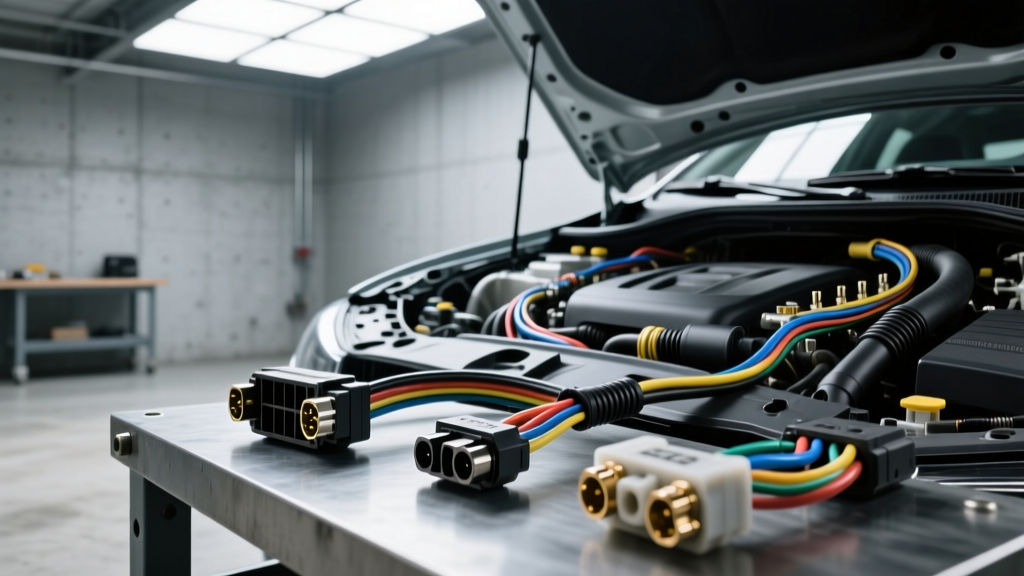
The Specialist Benchmark: Elevating Auto Electrical Selection
When diagnosing complex parasitic draws or engineering custom high-amperage circuits, the gap between DIY hacks and professional auto electrical work becomes immediately apparent. Top-tier regional specialists, such as the benchmark set by Willow Glen Auto Electric, do not rely on generic hardware store supplies. Instead, they utilize OEM-grade or superior aftermarket wiring ecosystems designed to withstand extreme underhood temperatures, constant vibration, and corrosive environments. This product comparison and selection guide breaks down the critical components—wire insulation, connector cavities, relays, and diagnostic tooling—required to build automotive electrical systems that meet or exceed specialist standards.
Primary Wire Selection: GXL vs. Standard PVC
The most common failure point in aftermarket automotive wiring is the degradation of polyvinyl chloride (PVC) insulation. Standard PVC wire, often found in consumer electronics or marine applications, becomes brittle and cracks when exposed to underhood temperatures exceeding 85°C (185°F). Specialist auto electricians strictly adhere to SAE J1128 standards, selecting Cross-Linked Polyethylene (XLPE) wires such as GXL, TXL, and SXL.
GXL (General Cross-Linked) wire offers a thin wall, high-temperature resistance up to 125°C (257°F), and superior abrasion resistance. When routing an 8 AWG power feed for an electric AC compressor or dual high-draw cooling fans, using GXL wire ensures the insulation will not melt against the exhaust manifold or firewall. Furthermore, the copper stranding in premium automotive wire is typically finer (e.g., 34/30 stranding for 10 AWG), providing the flexibility needed for tight engine bay looms without suffering from internal copper fatigue.
SAE J1128 Wire Specifications & Selection Chart
| AWG Size | Metric Equiv. | Max Continuous Amps (Chassis) | Insulation Type | Typical Application |
|---|---|---|---|---|
| 18 AWG | 0.80 mm² | 6A - 8A | GXL / TXL | Sensors, ECU triggers, LED lighting |
| 16 AWG | 1.30 mm² | 10A - 12A | GXL / TXL | Relay coils, horn circuits, dash illumination |
| 12 AWG | 3.00 mm² | 20A - 25A | GXL | Fuel pumps, window motors, blower motors |
| 8 AWG | 8.00 mm² | 40A - 50A | GXL / SXL | Electric fans, inverters, main harness feeds |
| 4 AWG | 20.0 mm² | 100A - 120A | SXL / Welding | Starter circuits, alternator main output |
Connector Ecosystems: Weather-Pack vs. OEM Sealed
Selecting the correct terminal and connector housing is just as critical as the wire itself. The Delphi (now Aptiv) Weather-Pack series remains a staple in the industry due to its robust silicone cavity seals and secondary locking mechanisms. However, for modern, high-density ECU connections, specialists transition to Metri-Pack 2.8 or TE Connectivity AMP Superseal 1.5 series connectors.
Weather-Pack connectors utilize cylindrical terminals and are rated for lower current densities per cavity compared to the flat-blade terminals of the Metri-Pack 2.8 series. When building a custom harness for a standalone engine management system, utilizing Metri-Pack 2.8 for injector and ignition coil circuits allows for a more compact footprint while safely handling the 5A to 8A peak inductive spikes generated by high-impedance fuel injectors.
Connector Cavity & Terminal Sizing Guide
| Connector Series | Terminal Type | Cavity Sizes Available | Max Current Rating | Best Use Case |
|---|---|---|---|---|
| Weather-Pack | Cylindrical Pin/Socket | #12, #16, #20 | 20A (#12 cavity) | Lighting, relays, sensors, external accessories |
| Metri-Pack 2.8 | Flat Blade 2.8mm | Sealed / Unsealed | 30A | Injectors, coils, high-draw solenoids |
| AMP Superseal 1.5 | Flat Blade 1.5mm | 2, 3, 4, 6 cavity | 14A | ECU pigtails, MAP/MAF sensors, CAN-Bus |
High-Amperage Circuit Protection & Relays
A hallmark of professional auto electrical work is the proper isolation of high-amperage loads via relays, ensuring that only low-amperage trigger signals pass through the cabin switchgear. The Bosch-style ISO Mini Relay (DIN 72552) is the universal standard. However, cheap aftermarket relays often use undersized internal contactors that pit and weld together under the inrush current of electric cooling fans or fuel pumps.
Specialists select relays with built-in diode or resistor suppression to protect sensitive ECU driver circuits from inductive voltage spikes (back-EMF) when the relay coil is de-energized. Furthermore, main battery feeds must be protected by ANL or Mega fuses, not standard ATC blade fuses, which lack the interrupting capacity for catastrophic short circuits in 4 AWG or larger cabling.
ISO Mini Relay Pinout & Wiring Standard
- Pin 30 (Common): Fused B+ 12V feed from the battery or main distribution block. Use 10 AWG or 12 AWG GXL wire depending on the load.
- Pin 87 (Normally Open): Output to the high-amperage load (e.g., fan motor, compressor clutch). Routes through the firewall or to the engine bay component.
- Pin 87a (Normally Closed): Unused in most standard automotive high-load applications; often clipped or insulated to prevent accidental shorts.
- Pin 85 (Coil Ground): Ground trigger. If controlled by an ECU, ensure the ECU pin can handle the relay coil draw (typically 70mA - 150mA).
- Pin 86 (Coil +12V): Switched 12V ignition source or cabin switch output. Use 16 AWG or 18 AWG wire.
Diagnostic Tooling: Multimeter Selection
You cannot accurately diagnose a CAN-Bus termination fault or a voltage drop across a corroded bulkhead connector with a standard consumer multimeter. Professional auto electricians rely on automotive-specific digital multimeters (DMMs) like the Fluke 88V. These tools feature a CAT III 1000V safety rating, essential for testing hybrid and EV inverter systems, and a built-in duty cycle and RPM measurement function. When diagnosing a failing alternator diode trio, the ability to measure AC ripple voltage (which should remain below 50mV AC at idle) is a non-negotiable requirement that separates specialist diagnostics from guesswork.
The Crimp & Solder Debate: Achieving Gas-Tight Terminations
A persistent myth in DIY automotive wiring is that soldering wire connections is superior to crimping. In high-vibration environments, soldered joints are prone to work-hardening and catastrophic fatigue failure just outside the solder wick boundary. Specialist shops utilize ratcheting, open-barrel crimping tools (such as TE Connectivity CERTI-CRIMP II dies) to create a gas-tight, cold-weld termination. A properly crimped 16 AWG terminal should withstand a minimum pull-test force of 30 lbs without the wire slipping or breaking. By combining a precision ratcheting crimp with an adhesive-lined, dual-wall heat shrink (rated for 125°C), the connection becomes fully sealed against moisture intrusion and mechanical stress.
Conclusion: Building a Specialist-Grade Vendor List
Emulating the standards of elite providers like Willow Glen Auto Electric requires a deliberate shift in how you source and select automotive electrical components. By rejecting generic PVC wire in favor of SAE J1128 GXL, matching the correct Metri-Pack or Weather-Pack cavity to the specific current draw, and utilizing ratcheting open-barrel crimp tooling, you ensure that your vehicle's electrical architecture will operate flawlessly for decades. Always verify wire cross-sections, mandate sealed connectors for any underhood or chassis application, and protect high-amperage feeds with appropriately rated ANL fusing to achieve true professional-grade reliability.